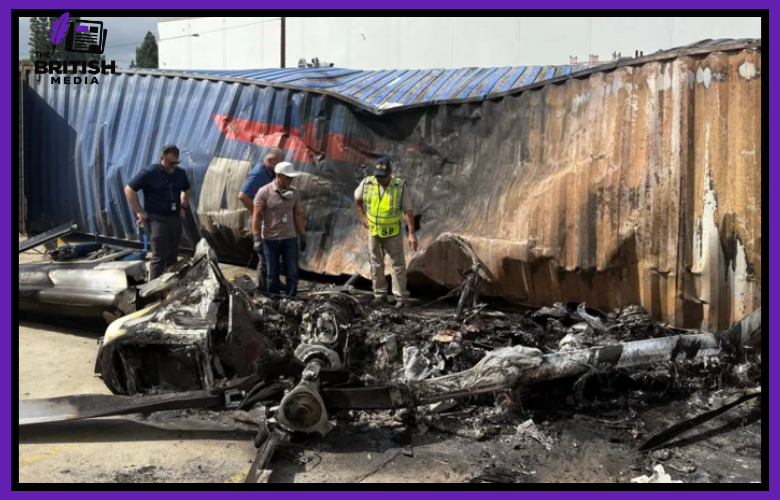
A helicopter crash can become a major news story within minutes, but the first reports rarely provide the full explanation. Investigators normally need time to examine the aircraft, flight records, weather conditions, maintenance history and witness accounts before identifying what happened. One of the latest serious incidents occurred in California, where a helicopter assisting firefighters during the Dome Fire in Yosemite-related operations crashed in Mariposa County on Sunday, killing the two people aboard. The Federal Aviation Administration confirmed the accident, while the National Transportation Safety Board is leading the investigation. At the time of the latest reports, officials had not established the cause.
Understanding the difference between confirmed information and early speculation is important. It also helps explain why aviation investigators can take weeks or months to reach firm conclusions.
What happened in the latest helicopter crash
The latest widely reported fatal incident involved a helicopter supporting wildfire response operations in California. According to the Federal Aviation Administration and local reporting, the aircraft went down in Mariposa County while crews were responding to the Dome Fire. Two people were aboard and both died. The company Precision later confirmed that the victims were members of its crew.
The Dome Fire had burned more than 3,000 acres by Monday, according to reporting based on official information. The demanding environment is relevant because firefighting helicopters operate around smoke, mountainous terrain, heat, changing winds and other aircraft. However, those conditions should not automatically be treated as the cause of the accident.
The NTSB is leading the investigation, with the FAA involved. No official cause had been released in the latest available reports, so claims about mechanical failure, pilot error or weather remain unconfirmed unless investigators establish them.
Why do helicopter crashes happen
There is rarely one universal explanation for a helicopter accident. Investigators usually examine several possible factors together rather than immediately blaming one problem.
Mechanical faults can involve the engine, transmission, rotor system, flight controls or other components. Human factors may include workload, visibility, decision-making or the demands of operating in difficult conditions. Weather can also become important, particularly when pilots encounter poor visibility, strong winds or rapidly changing conditions.
The operating environment matters too. A firefighting helicopter may fly low over uneven terrain while carrying out repeated manoeuvres. A news helicopter may operate around buildings, roads and other aircraft. Emergency medical, military and sightseeing flights each present different operational challenges.
This is why an early eyewitness description is useful but cannot replace an aviation investigation. The final explanation normally depends on physical evidence and verified records.
How investigators determine the cause
After a fatal accident, investigators begin by documenting the crash site and securing evidence. The wreckage can reveal important information about the aircraft’s final condition, although damage caused during the impact can make interpretation difficult.
Investigators may examine:
- Engine and rotor components for signs of failure
- Maintenance and inspection records
- Pilot qualifications, training and recent flying history
- Weather and visibility at the time of the flight
- Fuel records and aircraft loading
- Air traffic control information where applicable
- Witness statements and available video
- Flight-tracking or aircraft-recording information when available
Investigators then compare the physical evidence with the aircraft’s expected performance. This process can take considerable time. A preliminary report may establish important facts without identifying the final cause, while a later report can provide a much deeper reconstruction of the accident.
What the investigation means for families and the public
A formal investigation serves several purposes beyond explaining what happened. It can identify safety issues that might affect pilots, operators, regulators and manufacturers.
For families, the process can also provide a documented account of the circumstances surrounding a loved one’s death. However, investigations do not always produce immediate answers. Authorities may need to identify victims, recover wreckage, review records and carry out specialist testing before reaching conclusions.
The public should therefore be cautious with social media claims immediately after a crash. A photograph, video clip or witness account can provide useful evidence, but it may not show everything that happened during the flight.
In the California wildfire incident, officials had confirmed the deaths and the investigation arrangements, but the cause remained unknown in the latest reports. That distinction is important when reporting a developing aviation story.
How dangerous is helicopter travel
Helicopter operations involve different risks from conventional airline travel. Helicopters can take off and land in locations that fixed-wing aircraft cannot, which makes them valuable for emergency services, offshore work, mountain operations, news gathering and firefighting.
At the same time, their ability to operate close to the ground means some flights take place in environments where there is little room for recovery from a serious problem. Terrain, weather, visibility, aircraft weight and operational demands can all affect safety.
That does not mean every helicopter flight is inherently unsafe. Commercial and professional operators use maintenance programmes, pilot training, operational procedures and regulatory requirements to manage risks.
Safety also varies according to the type of operation. A scheduled passenger service, an emergency medical flight and a wildfire mission have different operating conditions. Looking at the specific aircraft, operator and circumstances is therefore more informative than treating every helicopter flight as the same.
Is it worth it to travel by helicopter
For many specialist operations, helicopter travel provides a capability that other aircraft cannot easily replace. Helicopters can reach remote communities, transport medical teams, support firefighting and access difficult terrain. For passengers, they can also provide rapid point-to-point transport where conventional travel would take much longer.
The decision to fly should still involve sensible safety considerations. Passengers can check whether the operator is properly authorised, whether safety instructions are clearly provided and whether the flight is being conducted in suitable conditions.
A recent crash does not by itself establish that another operator or flight is unsafe. Each incident has its own circumstances, and investigators need evidence before identifying the contributing factors.
For professional operations, the benefits can be particularly significant. Firefighting helicopters, for example, can deliver water or support crews in locations that would be difficult to reach by road. Their value therefore needs to be considered alongside the specific operational risks involved.
What happens after a fatal helicopter accident
A serious accident normally triggers several parallel responses. Emergency services first concentrate on rescue, firefighting and securing the area. Authorities then begin evidence collection while the aviation investigation develops.
The aircraft wreckage may be moved to a secure location for detailed examination. Investigators can inspect components that cannot be properly assessed at the crash site. They may also reconstruct the flight using available records and compare evidence from different sources.
Authorities can issue preliminary information while the investigation continues. However, preliminary findings should not be confused with a final conclusion.
In some accidents, investigators discover a technical problem that requires wider safety action. In others, several smaller factors combine to create a dangerous situation. Aviation safety investigations are designed to identify those contributing factors so that lessons can be applied beyond one aircraft or one operator.
Why early reports about a crash can change
Breaking aviation stories often develop rapidly. Initial reports may contain an incorrect aircraft description, an uncertain casualty figure or incomplete information about where the aircraft was operating.
That is normal during the first hours after an accident. Emergency crews are dealing with an active scene, while investigators are only beginning to establish the facts.
A reliable report should distinguish between what authorities have confirmed and what remains under investigation. For example, in the latest California accident, officials confirmed that two people died and that the helicopter had been supporting wildfire response. The cause had not yet been determined.
Readers should therefore be careful with headlines that present an unconfirmed explanation as fact. The most accurate picture usually becomes clearer as investigators recover evidence and release additional findings.
Other recent helicopter crashes under investigation
The California wildfire accident is not the only recent helicopter incident attracting attention. In Malaysia, a Flying Doctor Service helicopter crashed near Long Lellang in Sarawak, killing all five people aboard. Authorities recovered the wreckage for further examination, while investigators considered the aircraft’s route, refuelling arrangements and other circumstances.
A separate fatal helicopter accident in Kenya has also been under investigation. A preliminary report concerning the Mount Ololokwe crash found that the helicopter’s landing-gear skid struck a rock formation during low-level flight, while investigators continued examining factors including the pilot’s flying record, aircraft loading, fuel distribution and maintenance history.
These cases show why it is difficult to generalise about helicopter accidents. Different aircraft, missions, terrain and weather conditions can produce very different accident sequences.
What should people look for in reliable crash coverage
When following a developing helicopter accident story, the most useful information is usually the information that has been independently confirmed.
Look for reports that clearly identify the aircraft, location, number of people aboard and status of the official investigation. Statements from aviation authorities and accident investigators are particularly important when determining what is established.
It is also useful to check the date and time of a report. A story published shortly after an accident may contain information that is later corrected.
Avoid treating anonymous social media posts, dramatic videos or unverified claims as definitive evidence. Video can help investigators, but a short recording rarely shows every factor involved.
For readers trying to understand an accident, the key question is not simply what appears to have happened. It is what investigators have actually established and what remains uncertain.
Frequently asked questions
What causes most helicopter crashes?
There is no single cause that applies to every accident. Investigations can involve mechanical problems, weather, terrain, human factors, operational decisions or combinations of several factors. The cause must be established from evidence rather than assumed from early reports.
Who investigates a helicopter crash?
The responsible aviation accident investigation authority depends on the country and circumstances. In the latest California wildfire accident, the NTSB is leading the investigation, with the FAA involved.
How long does a helicopter crash investigation take?
The timescale varies considerably. A straightforward incident may be assessed relatively quickly, while a complex fatal accident can require extensive examination, testing and analysis before investigators publish final findings.
Can weather cause a helicopter accident?
Weather can be a contributing factor, particularly when visibility, wind or other conditions affect aircraft performance and pilot workload. However, investigators must establish whether weather actually contributed to a particular crash.
What happens to the helicopter after a crash?
Investigators normally secure and examine the wreckage. Important components may be removed for specialist testing, while records, maintenance documents, flight information and witness evidence are reviewed as part of the investigation.
Conclusion
A helicopter crash is more than a breaking-news headline. Each accident involves a combination of people, aircraft, operating conditions and decisions that investigators must examine carefully before a reliable explanation can be reached. The latest California wildfire accident demonstrates why early reporting should separate confirmed facts from speculation. Two crew members died after their helicopter crashed during operations connected with the Dome Fire, while the NTSB and FAA continue to investigate what happened.
For readers, the most useful approach is to follow verified updates and wait for investigators to establish the evidence. A helicopter can provide essential services in firefighting, healthcare, rescue and remote transport, but every operation has its own risk profile. Understanding those differences gives a clearer picture than judging helicopter travel from a single accident.