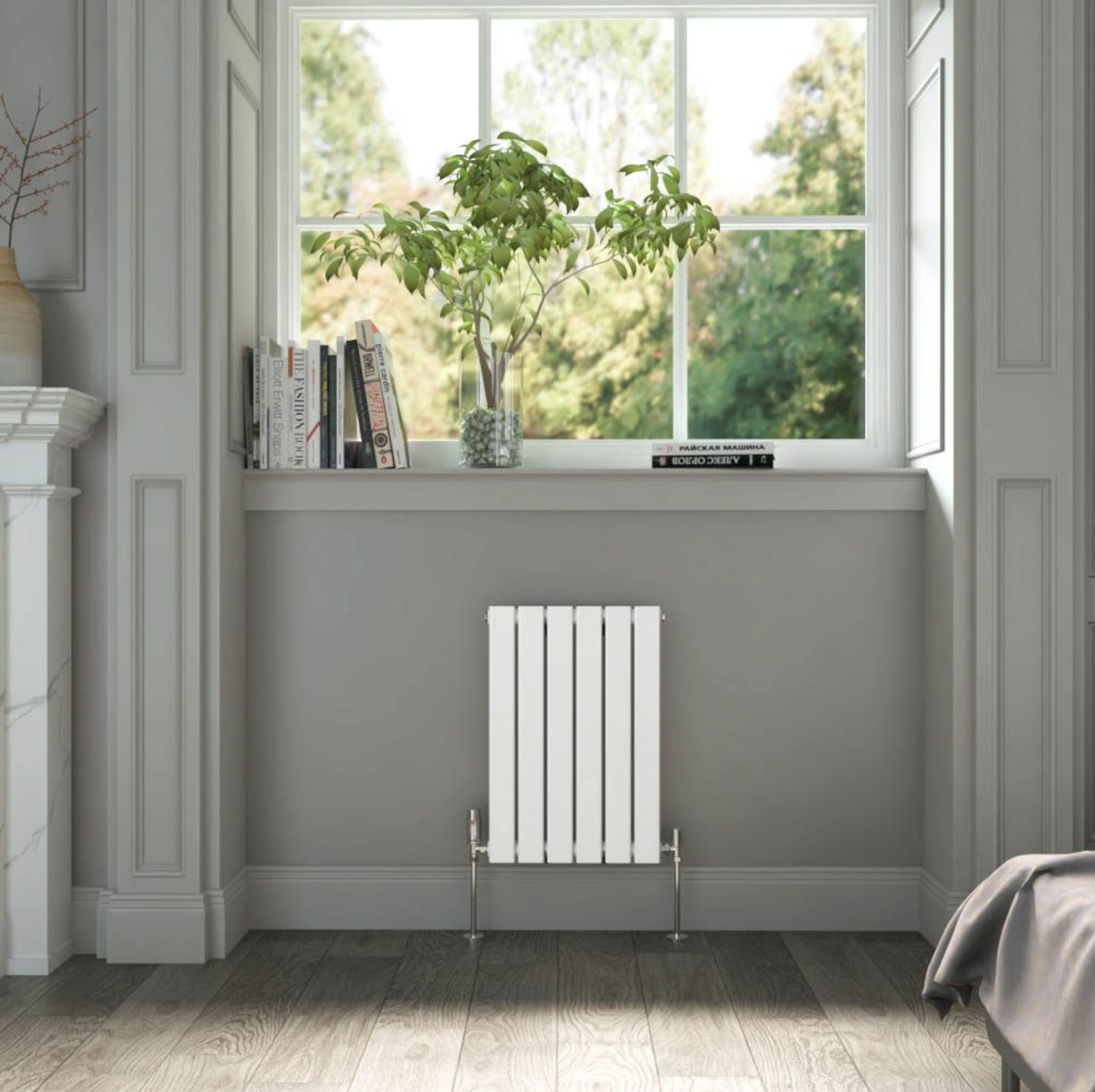
Oval panel radiators can give a room a contemporary look and keep it warm when it is cold outside. However, before you choose one, it is worth knowing how much it will cost to run. Surprisingly, the running cost of a radiator depends mainly on its heating output and how you use your central heating system.
The information provided will help you determine the running cost of an oval panel radiator should you decide to fit one in a bedroom, living room or hallway.
What Affects the Running Cost of Oval Panel Radiators?
There is no single running cost for every oval panel radiator. Several factors determine how much energy your heating system uses and how much you pay.
1. Radiator heat output
Radiator outputs are expressed in Watts (W) and British Thermal Units (BTUs) to indicate the amount of heat that is produced. A higher output means more heat will be produced but also means that to operate at full capacity, more energy will be required.
An electric radiator rated at 1,000W will use 1kWh of electricity to run at full output for one hour; a 2,000W model will use 2kWh over the same time period.
For water-filled radiators connected to a central heating system, the cost is made up of the cost of the energy used to heat the water by the boiler or heat pump, and the efficiency of the system itself.
2. Your heating system
The running cost is affected greatly by the type of heating system you use.
Gas central heating: The running cost depends on the type and amount of gas used to heat water, the efficiency of the boiler and how the heated water is distributed around the home. The oval panel radiator shown here does not consume any gas.
Electric heating: The running costs for an electric heated radiator are determined by its power in Watts, how long it is switched on for and the price you pay for your electricity in kWh per kWh.
Air source heat pump: An air source heat pump is connected to an oval panel radiator to make use of the heat it produces. Because heat pumps use several units of heat for each unit of electricity used (dependent on operating conditions), a heat pump system is very efficient. To get the best from your heat pump, ensure the radiator has been correctly sized for the system and that it is operating at a lower flow temperature.
The same radiator can cost significantly different amounts to run depending on the heating system that it is connected to.
How Much Does It Cost to Run an Electric Oval Panel Radiator?
If your oval panel radiator is an electric model, you can estimate its running cost using a simple calculation.
Running cost = Power in kW × Hours used × Electricity price per kWh
For example, assume a 1,000-watt electric radiator runs at full power for four hours and your electricity costs 25p per kWh.
- Power: 1,000 watts = 1 kW
- Usage: 4 hours
- Electricity rate: 25p per kWh
The calculation is:
1 kW × 4 hours × £0.25 = £1.00
Under these assumptions, the radiator costs £1 to run for four hours at full power.
A 2,000-watt radiator running at full power for the same period would use 8 kWh and cost £2 at that rate.
These are examples, not fixed prices. Check your current electricity tariff and the radiator’s rated power to calculate your own costs.
Do Thermostats Help Reduce Running Costs?
Yes, thermostats can help save energy.
Many electric radiators have thermostats built into the radiator. These are set to a temperature, and once that temperature is reached in the room, the radiator will either switch off or reduce output depending on the controls fitted to the radiator.
This means that a 1,000W electric radiator does not have to use 1,000W of power for every hour it is switched on. Its usage will depend on the room temperature, its insulation and the weather outside as well as the setting on the thermostat.
You can use a programmable thermostat to heat your rooms only when they are required, in contrast to maintaining a constant temperature throughout the day.
For example, you could set your bedroom to start heating at bedtime and decrease the temperature when you go to sleep. In the hallway, you could set it to a lower temperature as you don’t need to heat the space to the same temperature, and it will still feel warm and comfortable.
Programmable and smart thermostats offer flexibility in heating control, but it is vital to understand how much will be saved and what heating systems they are compatible with.
How Room Size Affects the Cost
The size and condition of a room influence how much heat it needs. A large living room may require more heating than a small bedroom, particularly if it has high ceilings or several external walls.
Before buying an oval panel radiator, consider:
- Room dimensions: Larger rooms usually need more heat.
- Insulation: Well-insulated rooms tend to lose heat more slowly.
- Windows and doors: Older glazing and draughts can increase heat loss.
- Desired temperature: Higher thermostat settings generally increase heating demand.
- Usage patterns: Heating a room for two hours costs less than heating it for eight hours, all else being equal.
Choosing a radiator that matches the room’s heat requirements can help you maintain comfort without relying on an undersized unit that struggles to warm the space.
A room-by-room heat-loss calculation is a useful way to estimate the required output.
Are Oval Panel Radiators Energy Efficient?
The oval shape alone does not determine energy efficiency. What matters is how well the radiator transfers heat into the room and how efficiently the heating system produces that heat.
A correctly sized radiator can help maintain a comfortable temperature. However, an oversized radiator does not automatically waste more energy if it is controlled properly, and a smaller radiator is not automatically cheaper to run if it cannot meet the room’s heat demand.
For electric radiators, nearly all the electricity consumed at the point of use is converted into heat. The cost still depends on the electricity tariff and how much heating the room needs.
For gas boilers and heat pumps, overall efficiency depends on the heating equipment, system design, controls, and operating temperatures.
To help manage energy use, keep doors closed where appropriate, reduce draughts, and use heating controls to avoid warming empty rooms unnecessarily.
How to Keep Your Radiator Running Costs Down
A few practical steps can help you manage your heating bills.
Choose the correct heat output
Check the radiator’s rated output and make sure it suits the room. For central heating, compare the output at the system’s intended water temperature rather than relying only on a headline figure.
Use sensible thermostat settings
Set a comfortable temperature rather than turning the heating up unnecessarily. Increasing the setting does not make a radiator heat the room instantly; it can simply cause the system to run for longer.
Improve insulation
Draught-proofing windows and doors, improving loft insulation where needed, and addressing other sources of heat loss can reduce the amount of heating required.
Avoid blocking the radiator
Large furniture and heavy curtains can restrict airflow around a radiator. Leave suitable clearance so heat can circulate the room.
Maintain your heating system
For water-filled radiators, check for cold spots, unusual noises, and signs of leaks. A heating professional can investigate problems and confirm that the system is operating correctly. Electric models should be used and maintained according to the manufacturer’s instructions.
Bottom Lines
The cost of running oval panel radiators depends on their power or heat output, the heating system they use, your energy tariff, and how long you need them to run.
For electric models, you can estimate the cost by multiplying the radiator’s power in kilowatts by the hours used and your electricity price per kWh. For radiators connected to a boiler or heat pump, the calculation depends on the efficiency and energy consumption of the wider heating system.
Before choosing a radiator for your bedroom, living room, or hallway, check its heat output and make sure it suits the space. Combine the right size with good insulation and sensible heating controls to help keep your home comfortable and manage running costs.