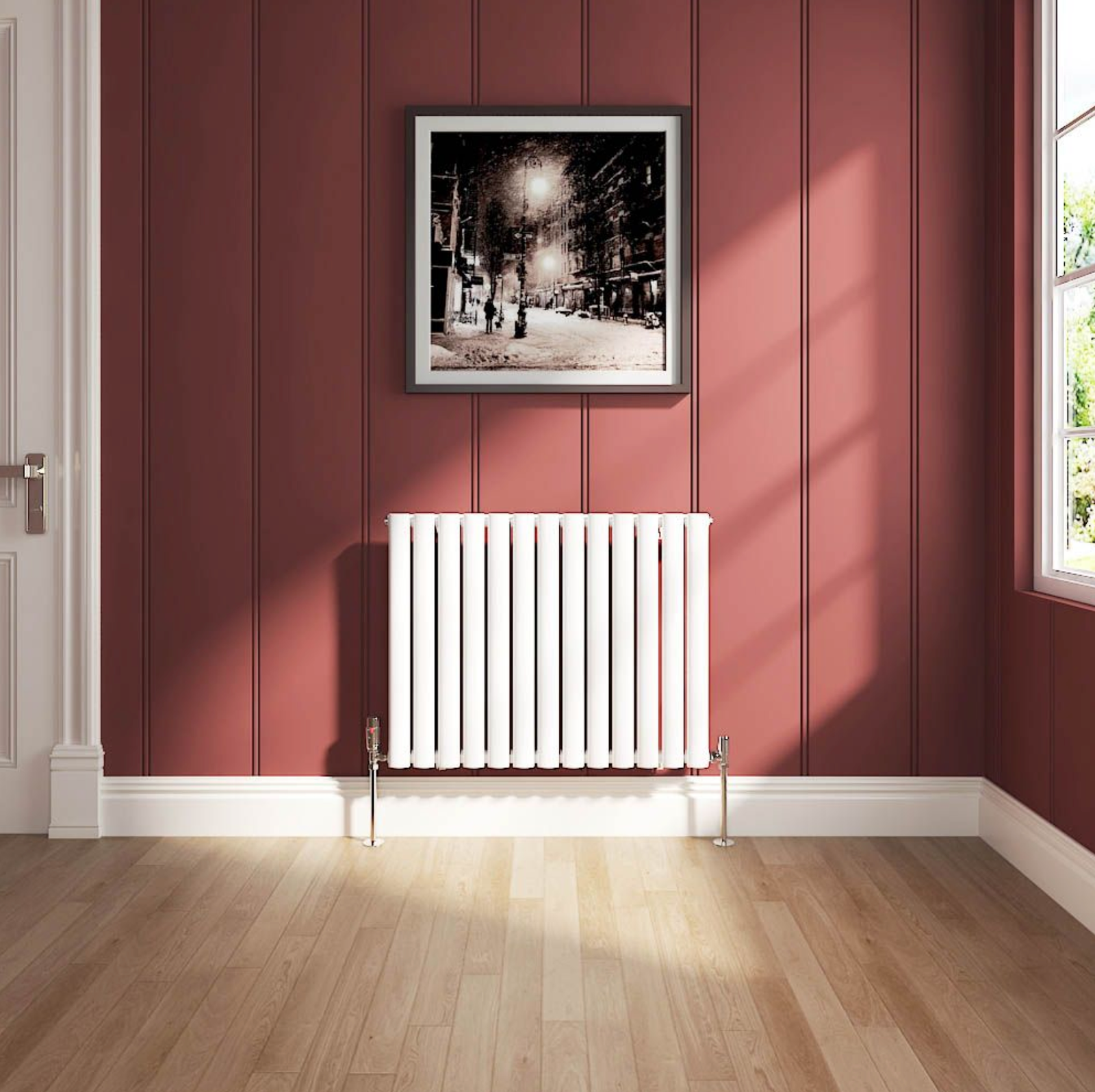
Replacing radiators in a UK home typically costs between £150 and £450 per radiator, including supply and installation. The final price depends on the radiator’s size, style, labour charges, and whether any pipework adjustments are needed. Older models of radiators can leak, suffer from rust and not heat a room sufficiently.
Replacing old radiators can not only improve your heating solution but also give your rooms a makeover. The cost to replace radiators is something to consider before booking any work. In addition to the cost of the radiators themselves, you may also wonder whether double panel radiators cost more to run than single panel radiators. This will depend upon the amount of heat that the radiator produces and for how long it is switched on.
In this article, we take a look at typical radiator replacement costs, as well as labour charges, to give you a clear indication of how much it’s likely to cost you in the UK.
Typical Radiator Replacement Costs in the UK
The cost to replace a radiator will depend upon size, model type and amount of work required to complete the installation. The cost to move a radiator or change pipework is generally more expensive than a straightforward replacement.
A standard panel radiator supplied and fitted would generally cost between £150 and £450. Some styles, such as vertical radiators or column radiators, can cost a lot more to supply and fit.
Here are some typical estimates:
| Radiator replacement job | Estimated cost |
| Small standard radiator, supplied and fitted | £150 – £220 |
| Medium standard radiator, supplied and fitted | £180 – £280 |
| Large standard radiator, supplied and fitted | £250 – £350 |
| Moving an existing radiator | £200 – £600 |
| Adding a radiator in a new position | £250 – £600+ |
| Designer or column radiator installation | £300 – £700+ |
These are indicative UK price ranges for 2026, not fixed quotes. Your location, radiator choice, pipework, and installation requirements will affect the final price. London and the South East can be more expensive than other parts of the country.
How Much Does the Radiator Itself Cost?
The radiator unit is only one part of the total expense. You also need to consider installation, valves, fittings, and any changes to the existing pipework.
Standard panel radiators are generally among the more affordable options. Designer and column models often cost more because of their materials, size, and appearance.
The following prices are broad estimates for the radiator itself:
- Single-panel radiators: Around £50 – £150.
- Double-panel radiators: Around £80 – £250.
- Vertical radiators: Around £100 – £400.
- Column radiators: Around £100 – £500 or more.
- Designer radiators: Around £150 – £600 or more.
- Heated towel radiators: Around £50 – £250.
Prices vary between manufacturers and retailers. Larger models and specialist finishes can cost more.
Do Double Radiators Cost More to Run?
Double-panel radiators have two heating panels rather than one. Many models also include convector fins to increase their heat output.
Because they can release more heat, they are often suitable for larger rooms or spaces that need additional warmth. However, this does not automatically mean they will cost more to run.
The actual running cost depends on the amount of heat your room needs. A double-panel radiator may reach the required temperature more comfortably than a smaller radiator that struggles to provide enough warmth.
For a gas central heating system, the boiler heats the water that circulates through the radiator. For an electric radiator, energy use depends on its power rating and how long it operates. With a heat pump, radiator sizing and the system’s operating temperature also affect efficiency.
The important thing is to choose a radiator with the correct heat output for the room. A room-by-room heat calculation can help you avoid choosing a model that is too small or unnecessarily large.
What Affects the Cost of Replacing Radiators?
A number of factors will influence the overall cost to replace your radiators.
1. Radiator size and style
A smaller standard panel radiator is likely to cost less to purchase and to install than a larger designer style radiator, such as a vertical radiator or a column radiator.
Changing the look of a room may require the use of vertical radiators or perhaps even some of the more stylish column radiators. It is vital to first check the amount of heat that they produce.
2. Labour charges
Labour costs will vary depending on the amount of time it takes for the plumber to complete the job. Typically, a radiator replacement can take anywhere from one to two hours depending on the situation, but some installations can be a lot more time-consuming.
Costs also vary from place to place. It’s best to get a clear quote and be told what is included in the work.
3. Pipework adjustments
Reproduction of an old radiator of similar size and location on a wall is the simplest form of work to be carried out.
However, many modern radiators have different pipe connections, and so may not align with the existing pipes. Accordingly, the connections may need to be altered.
This will generally involve some extra work, for example, lifting up floorboards and installing new pipework.
4. New valves and fittings
Radiator valves to control water flow into the radiator(s). Although these are probably OK, it makes sense to change these for new ones as old ones are often hard to use and can leak. Thermostatic radiator valves (TRVs) are very good for individual room control and can save loads of money by not heating a room when it is not required.
Thermostatic radiator valves (TRVs) enable you to set the temperature of individual rooms and save energy by ensuring that a room is not heated when it is not required.
5. Heating system condition
An older system could have sludge, rust, etc. in the system, which can affect the performance of the new radiators.
Should your heating system not have been properly serviced before, then it may be recommended to be cleaned or even flushed prior to installation of the new radiators in order to prevent any potential damage to them.
Is It Cheaper to Replace All Radiators at Once?
Even if several radiators are to be replaced, it will often work out cheaper on average per radiator if the work is done as one job.
Heating engineers can carry out simple work like replacing several radiators during one visit. This can help to reduce the average price per radiator and may also help to avoid separate call-out charges.
Not all radiators need to be replaced. Sometimes just the damaged one or two that have stopped working can be replaced by better models.
Ask for your system to be fully inspected by the engineer; he will then be able to highlight which radiators need attention and possibly if some of your existing radiators can remain.
When Should You Replace Your Radiators?
Radiators can last for many years, but they do not last forever. There are several signs that yours may need replacing.
- Cold spots: Parts of the radiator remain cold even after the heating has been on.
- Visible rust: Corrosion around the body or connections may lead to leaks.
- Frequent leaks: Repeated problems can suggest that the radiator or its fittings are deteriorating.
- Poor heat output: The radiator struggles to warm the room despite a working heating system.
- Unusual noises: Banging or gurgling may indicate trapped air or system problems. These issues do not always mean the radiator needs replacing.
Before buying a new model, ask a heating professional to investigate persistent problems. Sometimes bleeding, balancing, or cleaning the system can improve performance without the expense of a replacement.
How to Save Money When Replacing Radiators
It’s easy to keep costs of replacement down.
Choose a radiator of similar size: By choosing a replacement radiator of similar size to your existing one, you may be able to avoid additional work to the pipework.
The cost of alternative styles can vary significantly, especially when compared to standard panel radiators. It is therefore worth comparing the cost of the radiator with its heat output before purchasing.
Replacing several radiators at once: Ask for a combined installation price when you need to replace several of your existing radiators.
Make sure all worn valves are replaced at the same time to prevent further visits by the plumber.
Final Thoughts
The cost to replace radiators in the average UK home will depend upon the type, size of the new radiator(s) and the necessary work to install them. Simple panel radiator replacements will cost in the region of £150 +VAT to £450 +VAT supplied and fitted, whilst more specialist designer radiators and more involved installs with the need for new pipework can cost a great deal more.
It’s worth noting that you don’t have to replace all of your radiators at once. Before buying a new replacement radiator, consider the room that it’s going to be used in along with your budget and the condition of your current heating system.
Installing the right radiator, the correct valves, and making sure your central heating is maintained will allow you to keep your home at the comfort temperature you need while looking after the planet.