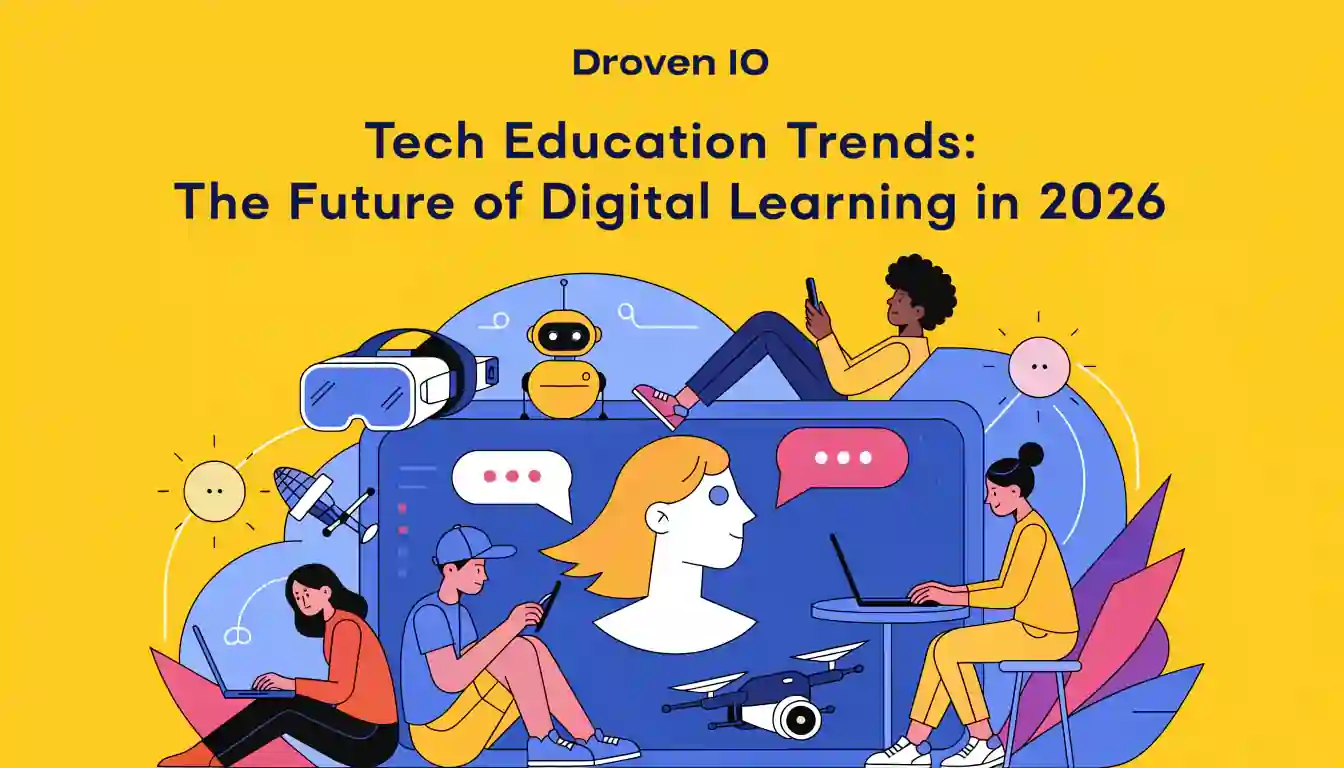
The concept of Droven IO tech education trends represents the rapid transformation of modern learning systems driven by digital innovation, artificial intelligence, and global connectivity. Education is no longer confined to traditional classrooms or rigid academic structures. Instead, it is evolving into a flexible, skill-oriented ecosystem where learners can access knowledge anytime, anywhere, and in highly personalized formats.
In 2026, this shift is becoming more visible than ever. Platforms inspired by Droven IO-style learning approaches focus on adaptability, real-world skills, and technology-integrated education systems. The result is a new educational model that prioritizes performance, problem-solving ability, and continuous learning over memorization and outdated testing methods.
Evolution of Tech Education in the Digital Era
The evolution of technology in education has been gradual but extremely powerful. Earlier systems were centered around textbooks, physical classrooms, and standardized exams. However, with the rise of cloud computing, mobile technology, and artificial intelligence, education has shifted toward a fully digital ecosystem.
Droven IO technology education trends reflect this evolution by emphasizing how learners interact with content. Instead of passive reading or listening, students now engage in interactive simulations, AI-assisted tutoring, and real-time collaboration across borders. This transformation has redefined what it means to “learn,” making education more dynamic, engaging, and results-driven.
AI-Powered Personalized Learning Systems
One of the most significant developments in modern education trends is the integration of artificial intelligence into learning environments. AI-powered systems analyze student behavior, strengths, weaknesses, and progress patterns to deliver customized learning experiences.
In Droven IO-inspired education models, AI functions as a virtual tutor that adjusts difficulty levels, recommends study materials, and provides instant feedback. This eliminates the one-size-fits-all approach and replaces it with adaptive learning paths tailored to each individual.
As a result, learners can progress at their own pace. Fast learners are not held back, while struggling students receive additional support exactly where needed. This personalization significantly improves learning efficiency and long-term retention of knowledge.
Shift from Degree-Based Learning to Skill-Based Education
A major trend shaping the future of education is the transition from degree-focused systems to skill-based learning frameworks. Employers today are increasingly interested in what individuals can actually do rather than what degrees they hold.
Droven IO technology education trends highlight this shift by encouraging hands-on experience, project-based learning, and real-world applications. Instead of relying solely on theoretical knowledge, learners build portfolios, complete simulations, and participate in practical exercises that mirror real job environments.
This approach ensures that graduates are job-ready from day one. Skills such as coding, cybersecurity, data analysis, and digital marketing are becoming more valuable than traditional academic qualifications in many industries.
Rise of Microlearning and Modular Education
Modern learners often struggle with time constraints and information overload. To address this issue, microlearning has emerged as a powerful educational strategy. Microlearning breaks complex topics into small, digestible modules that can be completed in short time intervals.
Within Droven IO-style education systems, microlearning is combined with stackable certifications. This means learners can gradually build expertise by completing multiple short courses that eventually form a comprehensive skill set.
This method is especially effective for working professionals who need continuous upskilling without committing to long-term academic programs. It also improves knowledge retention because learners engage with focused, high-impact content rather than overwhelming material.
Growth of Online and Hybrid Learning Models
Online education has become a permanent fixture in the global learning ecosystem. The hybrid model, which combines online and in-person learning, is now widely adopted across institutions and training platforms.
Droven IO technology education trends emphasize the flexibility of this model. Students can attend live virtual classes, access recorded lectures, and participate in interactive workshops without geographical limitations. At the same time, occasional physical sessions enhance collaboration and practical exposure.
This blended approach offers the best of both worlds: convenience and accessibility of digital learning combined with the engagement and structure of traditional education systems.
Immersive Learning Through VR and AR Technologies
One of the most exciting developments in modern education is the use of virtual reality (VR) and augmented reality (AR). These technologies allow learners to experience complex concepts in immersive environments rather than just reading about them.
For example, medical students can practice surgeries in virtual labs, engineering students can simulate machinery operations, and history students can explore reconstructed ancient civilizations. Droven IO-inspired education systems integrate these tools to make learning more experiential and impactful.
This type of immersive education significantly enhances understanding, especially in technical fields where practical exposure is essential for mastery.
Cloud-Based Learning Ecosystems and Accessibility
Cloud computing has revolutionized access to education by removing hardware limitations and geographical barriers. Students can now access powerful tools, coding environments, and digital labs directly through cloud platforms.
Droven IO technology education trends highlight how cloud-based systems make education more inclusive and scalable. Learners no longer need expensive equipment or specialized infrastructure to gain technical skills. Everything is available online, making high-quality education accessible to a global audience.
This democratization of learning is one of the most important advancements in modern education, especially for developing regions.
Data-Driven Decision Making in Education
Data analytics plays a crucial role in modern learning environments. Educational platforms now collect and analyze large amounts of data related to student performance, engagement levels, and learning patterns.
In Droven IO-style systems, this data is used to improve teaching methods and personalize learning experiences. Educators can identify weak areas in real time and adjust content accordingly, ensuring better outcomes for students.
This data-driven approach creates a more efficient and measurable education system where progress is continuously tracked and optimized.
The Importance of Lifelong Learning in a Digital Economy
The fast-paced nature of technological advancement has made lifelong learning a necessity rather than an option. Skills that are relevant today may become outdated within a few years due to rapid innovation.
Droven IO technology education trends strongly emphasize continuous learning. Professionals are encouraged to regularly update their skills in areas such as artificial intelligence, cybersecurity, cloud computing, and data science.
This shift ensures that individuals remain competitive in the job market and can adapt to evolving industry demands throughout their careers.
Globalization of Education and Borderless Learning Systems
Education is no longer limited by geography. Digital platforms have enabled students from different countries to learn together, collaborate on projects, and access the same high-quality resources.
Droven IO-style education models promote global classrooms where diversity enhances learning experiences. Students gain exposure to different perspectives, cultures, and problem-solving approaches, which is highly valuable in today’s interconnected world.
This globalization of education also opens up opportunities for international certifications and remote job placements.
Balancing Technology with Human Skills
While technology plays a central role in modern education, human skills remain equally important. Critical thinking, communication, creativity, and teamwork are essential for success in any field.
Droven IO tech education trends emphasize a balanced approach where technical expertise is combined with soft skills development. This ensures that learners are not only technically proficient but also capable of working effectively in collaborative environments.
The combination of human intelligence and technological literacy creates well-rounded professionals who can adapt to complex real-world challenges.
Challenges in Implementing Modern Education Trends
Despite its advantages, the digital transformation of education comes with certain challenges. One of the biggest issues is the digital divide, where some students lack access to devices or reliable internet connections.
Additionally, data privacy concerns and over-reliance on artificial intelligence are growing issues that need to be addressed carefully. Educational institutions must ensure that technology enhances learning without compromising security or human interaction.
Addressing these challenges is essential for creating a fair and sustainable digital education ecosystem.
FAQs
What are Droven IO tech education trends?
Droven IO tech education trends refer to modern shifts in digital learning that focus on AI-powered education, skill-based training, online learning platforms, and immersive technologies. These trends aim to make education more flexible, personalized, and aligned with real-world job requirements.
How is AI changing tech education in 2026?
Artificial intelligence is transforming education by creating personalized learning experiences. AI systems can analyze student progress, suggest tailored lessons, provide instant feedback, and even act as virtual tutors. This makes learning faster, more efficient, and highly adaptive to individual needs.
Why is skill-based learning becoming more important than degrees?
Skill-based learning is gaining importance because employers now prioritize practical abilities over formal qualifications. Real-world skills, project experience, and certifications are often more valuable than traditional degrees, especially in fast-changing industries like technology and digital marketing.
What is microlearning in tech education?
Microlearning is a teaching method that delivers content in small, focused lessons that can be completed in short time periods. It helps learners understand complex topics easily and improves retention by breaking information into manageable sections.
How do VR and AR improve learning experiences?
Virtual Reality (VR) and Augmented Reality (AR) make learning more immersive by allowing students to interact with simulated environments. For example, medical students can practice surgeries, and engineering students can explore 3D models, making education more practical and engaging.
Conclusion
The future of education is being reshaped by innovation, automation, and global connectivity. Droven IO tech education trends highlight a shift toward personalized, skill-based, and technology-driven learning systems that prepare students for the realities of the modern workforce.
As AI, cloud computing, and immersive technologies continue to evolve, education will become even more interactive, accessible, and outcome-focused. The ultimate goal is not just to transfer knowledge but to build adaptable, future-ready individuals capable of thriving in a rapidly changing digital world.
You may also read