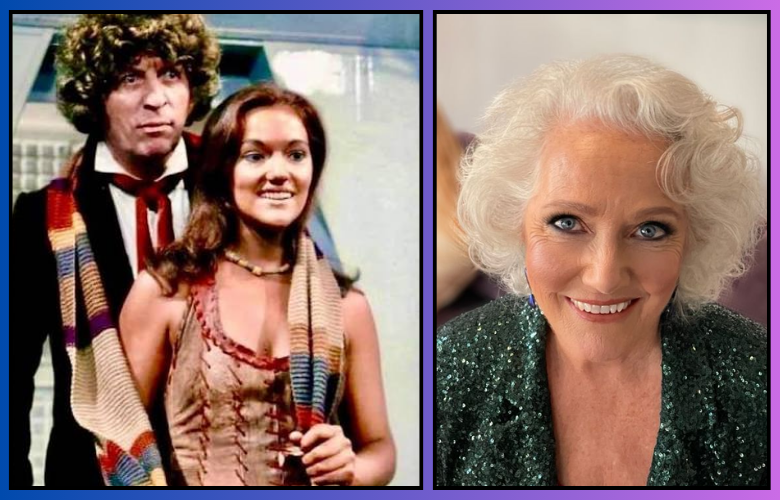
Louise Jameson is one of the most recognisable British actresses of her generation, with a career spanning more than five decades across television, theatre, film, writing, directing and audio drama. Born in Wanstead, London, in 1951, she trained at the Royal Academy of Dramatic Art before developing a substantial stage career and working with the Royal Shakespeare Company. She became a household name after taking the role of Leela, the Warrior of the Sevateem, alongside Tom Baker’s Fourth Doctor in Doctor Who.
Born in Wanstead, London, in 1951, Jameson trained at the Royal Academy of Dramatic Art and subsequently worked with the Royal Shakespeare Company. Today, she remains closely connected with Doctor Who through Big Finish audio productions and continues to be recognised by television audiences through her role as Mary Goskirk in Emmerdale.
Who Is Louise Jameson?
Louise Marion Jameson is an English actress, director and writer who established herself as a professional performer in the 1970s. Her formal training at RADA was followed by substantial theatre work, including approximately two and a half years with the Royal Shakespeare Company. This classical background became an important foundation for the variety of characters she would portray throughout her career.
Although television eventually made her widely recognisable, Jameson’s career has never been limited to the screen. Her official biography describes her as a classically trained actress whose first love is the stage, and her work includes theatre performances, directing, writing and audio drama.
That breadth is what makes her career particularly interesting. Someone discovering her through Emmerdale may not realise that the actress playing Mary Goskirk was also one of the most memorable companions of the classic Doctor Who era.
Louise Jameson Age and Birthplace
Was born on 20 April 1951 in Wanstead, London, England. She is 75 years old in 2026. Her birth name is Louise Marion Jameson, and her listed height is 1.68 metres, or approximately 5 feet 6 inches.
Her age is significant when considering the length of her career. Jameson entered professional acting more than five decades ago and has continued to work across different generations of British television.
Rather than disappearing after achieving recognition in Doctor Who, she developed a varied career that included serious drama, detective series, soap opera, theatre and audio productions.
This longevity also means that different generations may know her for completely different reasons. Older viewers may immediately associate her with Leela, while contemporary soap audiences are more likely to recognise her as Mary Goskirk in Emmerdale.
Louise Jameson’s Early Life and Acting Training
Jameson’s formal acting education at the Royal Academy of Dramatic Art played an important role in shaping her career. RADA is one of Britain’s best-known drama schools, and her training gave her a strong grounding in performance, voice and classical theatre.
Following her training, she developed considerable stage experience and worked with the Royal Shakespeare Company. This period helped establish her as a serious theatre performer before television made her nationally recognisable.
Her early screen credits included appearances in productions such as Z Cars and Emmerdale Farm, as well as the 1972 horror film Disciple of Death.
This early stage of her career is important because it shows that Doctor Who was not an overnight beginning. Jameson already had professional training and performance experience before landing the role that would make her a household name.
Doctor Who
Jameson’s defining television breakthrough came when she was cast as Leela, the Warrior of the Sevateem, in Doctor Who. She made her debut in The Face of Evil in 1977 and became a companion of Tom Baker’s Fourth Doctor.
Leela was very different from many traditional television companions. She was a warrior from an alien society, physically courageous and accustomed to dealing with danger. Her direct approach often contrasted with the Doctor’s intellectual and eccentric personality.
Jameson’s performance helped make Leela distinctive. Rather than simply functioning as an audience surrogate, the character had her own skills, instincts and worldview.
Jameson appeared in two seasons of the programme. Her original television run ended in 1978, but her connection with the character has continued for decades through conventions, interviews, DVD features and audio drama.
Why Leela Became One of Doctor Who’s Most Memorable Companions
Leela remains popular because she was an unusually strong and distinctive companion for the period in which she appeared.
She was not dependent on the Doctor for every solution. Her knowledge of survival, combat and her own culture allowed her to contribute actively to the stories.
The contrast between Leela and the Fourth Doctor also created an effective dramatic partnership. Tom Baker’s Doctor was often playful, eccentric and intellectually dominant, whereas Leela approached unfamiliar situations through instinct and practical action.
Jameson’s performance gave the character emotional depth as well. Leela’s lack of knowledge about contemporary human society created opportunities for humour, while her developing relationship with the Doctor provided a more serious emotional thread.
The character therefore worked on several levels: adventure, comedy, character development and science-fiction storytelling.
Louise Jameson and Tom Baker
Jameson’s Doctor Who career is inseparable from her work opposite Tom Baker, who played the Fourth Doctor. Their characters travelled together during a period when the programme was at the height of its popularity.
The relationship between the actors has attracted considerable interest from fans over the years. Jameson has spoken about their working relationship and has also noted that their relationship later became much more comfortable at conventions and fan events.
This is an important distinction when discussing their partnership. On-screen chemistry and an actor’s personal working relationship are not necessarily the same thing.
What remains undeniable is the lasting popularity of the Fourth Doctor and Leela combination. Their stories continue to be revisited through home releases, fan discussions, conventions and audio productions.
For many classic Doctor Who viewers, Jameson’s Leela remains one of the defining companions of Tom Baker’s era.
Why Did Louise Jameson Leave Doctor Who?
Jameson left Doctor Who in 1978 after completing her second season. One important factor was the opportunity to return to the stage in a prestigious production of The Merchant of Venice, in which she was offered the role of Portia at the Bristol Old Vic.
Her decision is revealing because it demonstrates that she did not view television fame as the only measure of professional success.
The popularity of Doctor Who could have encouraged her to remain associated with Leela for longer, but her theatrical ambitions were equally important.
Leaving the programme ultimately allowed her to explore different characters and genres. In the years that followed, she built a substantial television career that proved she was capable of much more than playing one iconic science-fiction character.
Her departure therefore became an important turning point rather than the end of her most successful period.
Louise Jameson After Doctor Who
After Doctor Who, Jameson continued to develop her television career with roles that demonstrated her range.
She appeared as Anne Reynolds in The Omega Factor and later as Blanche Simmons in Tenko. She also became associated with Bergerac, playing Susan Young alongside John Nettles.
These productions were important because they moved Jameson into very different dramatic settings.
The Omega Factor gave her another opportunity to work within supernatural and speculative drama, while Tenko demanded a more serious dramatic approach. Bergerac, meanwhile, placed her within the popular British detective-drama tradition.
This variety helped establish Jameson as a character actress who could move between genres rather than being permanently defined by her Doctor Who identity.
Louise Jameson in Tenko
Tenko is one of the most important titles in Jameson’s post-Doctor Who career. The BBC drama explored the experiences of women imprisoned in Japanese internment camps during the Second World War.
Jameson played Blanche Simmons, a role that required a substantially different performance from Leela.
The importance of Tenko in her filmography lies partly in its subject matter. The series focused on survival, relationships, authority, fear and resilience, giving its cast opportunities to explore complex human situations.
For viewers researching Jameson’s career beyond science fiction, Tenko is therefore an especially useful programme to investigate.
It demonstrates how quickly she was able to move from a highly stylised genre role into serious historical drama without losing credibility as a performer.
Louise Jameson in Bergerac
Jameson also became known to British television audiences through Bergerac, the popular detective drama starring John Nettles.
She played Susan Young, adding another substantial television role to a growing list of credits. The character was very different from Leela and Blanche Simmons, once again demonstrating Jameson’s willingness to work in different genres.
Bergerac was an important part of her television career because it brought her into a mainstream crime-drama environment rather than science fiction or historical drama.
Her ability to move between these formats helped establish a pattern that continued throughout her career.
Rather than following one fixed type of character, Jameson repeatedly accepted roles that allowed her to explore new dramatic settings and relationships.
Louise Jameson in EastEnders
Between 1998 and 2000, Jameson played Rosa di Marco in EastEnders. The role introduced her to another enormous British television audience and demonstrated her ability to work within the demanding production environment of a continuing soap.
Soap acting presents particular challenges. Episodes are produced rapidly, actors often have large amounts of dialogue to learn and there may be considerably less rehearsal time than in theatre or traditional filmed drama.
Jameson’s background in stage performance gave her a strong foundation, but EastEnders required her to adapt that experience to a faster production model.
Her time on the programme is another example of the variety within her career. She had moved from classic theatre to science fiction, historical drama and detective television before entering one of Britain’s most recognisable soaps.
Louise Jameson in Emmerdale
For many modern viewers, Jameson is best known as Mary Goskirk in Emmerdale. She joined the ITV soap as Mary, the mother of Rhona Goskirk, adding another long-running television role to her career.
Her involvement with Emmerdale has an interesting historical connection. Jameson had previously appeared in Emmerdale Farm in the 1970s, meaning her career is linked to the programme across different eras.
Mary is a very different character from Leela. Instead of an alien warrior travelling through time and space, Mary is a contemporary mother dealing with family relationships, emotional conflict and village life.
This contrast illustrates one of the strongest features of Jameson’s career: her ability to make radically different characters feel convincing.
Mary Goskirk and Louise Jameson’s Modern Career
Mary Goskirk has allowed Jameson to remain visible to a mainstream television audience decades after her original Doctor Who success.
The role also provides a useful example of how established actors can continue to contribute meaningfully to continuing drama. Jameson’s experience brings authority to scenes while the character remains part of an evolving ensemble.
ITV has continued to feature Mary in major Emmerdale storylines, including scenes involving her daughter Rhona and the wider village community.
For viewers who know Jameson only from classic television, Emmerdale offers an opportunity to see a very different side of her acting.
For younger audiences, meanwhile, Mary Goskirk may be their first introduction to an actress whose career began decades before they were born.
Louise Jameson’s Theatre Career
Theatre remains a major part of Jameson’s professional identity. Her official biography describes the stage as her first love, reflecting the importance of theatre throughout her career.
Her work with the Royal Shakespeare Company was particularly significant because it gave her substantial experience with classical drama.
Later theatre credits include Vincent River, for which she received recognition during its West End run, as well as other stage productions.
Jameson has also directed theatre, including a UK tour of Revenge. Her involvement behind the scenes demonstrates that her creative career extends beyond performing.
This theatrical foundation helps explain her adaptability on screen. Stage training demands close attention to character, language, movement and audience connection, all of which can benefit an actor working in television and audio.
Louise Jameson as a Writer and Director
Jameson’s work has expanded beyond acting into writing and directing. Her official site lists writing projects including ATA Girl and Beware the Goblin Men, as well as directing work.
This is an important part of her professional story because it shows that she has developed a broader relationship with storytelling.
Writing allows an actor to create characters and narratives rather than simply interpret material written by somebody else. Directing adds another perspective, requiring an understanding of performance, pacing and the overall production.
Her experience in several areas of the creative industries also helps explain her continued relevance.
Rather than relying entirely on television acting, Jameson has built a portfolio that includes performance, theatre, writing, directing and audio work.
Louise Jameson and Doctor Who Audio
Jameson’s relationship with Doctor Who has continued long after her original television appearances. She has returned as Leela in Big Finish audio productions, where the character has appeared in new adventures alongside the Fourth Doctor.
This is particularly significant because audio drama allows classic characters to continue developing without recreating the original television production.
Jameson’s official site confirms that in 2026 she continues to play Leela in Big Finish’s Fourth Doctor stories.
Her involvement also demonstrates the unusual longevity of the character. Leela first appeared on television in the 1970s, yet Jameson is still performing the role for audiences today.
For long-term Doctor Who fans, this provides continuity. For newer listeners, it offers an accessible way to experience the character without needing to begin with the original television episodes.
Louise Jameson Children and Family
Public biographical information identifies Jameson as the mother of two sons, Harry Jameson and Tom Jameson. IMDb also lists Russell Jameson as her sibling.
Jameson has generally kept her family life relatively private compared with the amount of attention given to her acting career.
Available biographical information states that her two sons were born in the 1980s and that both entered the fitness business.
For readers searching specifically for Louise Jameson and her family, this is useful context, but her professional career remains far more extensively documented.
It is also important to avoid confusing public biographical information with online speculation. A high-quality profile should distinguish between established details and claims that cannot be reliably confirmed.
Louise Jameson Personal Life
Jameson has maintained a relatively private approach to many aspects of her personal life. As a result, the strongest information available about her concerns her acting career, theatre work, creative projects and public activities.
This is particularly relevant when researching celebrity biographies online. Search results often mix reliable biographical information with unsupported claims about relationships, wealth or family circumstances.
A more useful approach is to focus on information that can be traced to established professional biographies, Jameson’s own website and reputable entertainment sources.
What is clear is that Jameson has built a substantial professional life around acting and storytelling. Her career includes television, theatre, audio, writing and directing, while her charitable involvement has also formed part of her public work.
Louise Jameson’s Charity Work
Away from acting, Jameson has supported charitable work and is a patron of DAVSS, a community organisation supporting male and female victims of domestic abuse in West Kent. Her official website identifies her as a patron of the organisation.
This aspect of her public life adds another dimension to her career.
Celebrity profiles often focus almost exclusively on television appearances, but long-term public figures can also use their visibility to support causes that matter to them.
Jameson’s association with DAVSS is therefore relevant when considering her wider contribution outside entertainment.
It also fits with her broader involvement in community and charitable activities, demonstrating that her professional identity extends beyond acting credits.
The Benefits of Understanding Louise Jameson’s Full Career
Looking at Jameson’s entire career rather than concentrating on one famous role provides several useful insights.
First, it shows how important formal training and stage experience can be for a long acting career. Her RADA education and Royal Shakespeare Company background gave her a strong foundation.
Second, her career demonstrates the value of versatility. She has worked successfully in science fiction, historical drama, crime television, soap opera, theatre and audio.
Third, her career provides a practical example of longevity. Her work has remained relevant because she has continued adapting rather than relying exclusively on nostalgia.
The main lessons from her career include:
- Build strong foundations before seeking fame.
- Do not allow one successful role to define an entire career.
- Develop skills across different formats.
- Continue learning and adapting as audiences change.
- Explore writing, directing and other creative opportunities.
Also Read:Rob Beckett Wife Revealed: Inside the Private Life of Louise Watts and Their Family Story
Real-Life Examples of Louise Jameson’s Versatility
The easiest way to understand Jameson’s range is to compare her most recognisable roles.
As Leela, she portrayed an alien warrior in Doctor Who. As Blanche Simmons, she worked within the serious historical drama of Tenko. As Susan Young, she became part of the detective world of Bergerac. As Rosa di Marco, she entered the fast-moving environment of EastEnders. Today, she is known by many viewers as Mary Goskirk in Emmerdale.
These characters have very different personalities, settings and dramatic requirements.
Her continued work in audio adds another dimension. She can return to a character created almost 50 years ago while simultaneously taking on new roles.
That combination of continuity and reinvention is one of the clearest reasons for her enduring professional appeal.
Why People Continue to Search for Louise Jameson
Interest in Jameson comes from several generations of television viewers.
Classic Doctor Who fans search for information about Leela, her relationship with the Fourth Doctor and her later return to the character through audio.
British soap audiences are more likely to search for Mary Goskirk, while viewers interested in classic drama may know her from Tenko, Bergerac or The Omega Factor.
There is also curiosity about her age, early career, RADA training, theatre work and family.
This wide range of search intent is important because it demonstrates that Jameson’s relevance is not dependent on a single programme. Her name connects classic science fiction, British television drama, theatre, audio storytelling and contemporary soap.
That makes her biography particularly valuable as a career overview rather than a simple celebrity profile.
Most Important Career Achievements
Several milestones stand out when assessing Jameson’s career.
Her training at RADA and subsequent work with the Royal Shakespeare Company established her theatrical credentials. Her casting as Leela then brought widespread television recognition.
Her later roles in The Omega Factor, Tenko and Bergerac demonstrated that she could move beyond science fiction. Her appearance as Rosa di Marco in EastEnders expanded her profile again, while Mary Goskirk in Emmerdale introduced her to a contemporary soap audience.
Her continuing work in Doctor Who audio is perhaps the clearest example of her career’s longevity. In 2026, she remains the voice and performer behind Leela in new Big Finish stories.
Together, these achievements make her one of the more enduring figures associated with British television.
Is Career Still Worth Following?
Yes. career is still worth following because she remains professionally active while continuing to explore different areas of performance.
For Doctor Who fans, her ongoing work as Leela provides a direct connection to the classic era. Her official website confirms new Fourth Doctor audio stories in 2026.
For television viewers, her work as Mary Goskirk in Emmerdale demonstrates that her career is not simply based on nostalgia.
Her theatre, writing and directing activities provide further reasons to explore her work.
The strongest reason to follow Jameson’s career, however, is its range. She has successfully moved between stage and screen, classic drama and popular television, acting and writing, and television and audio.
That combination makes her career relevant to both long-term fans and people discovering her work for the first time.
Frequently Asked Questions
How old is Louise Jameson?
as born on 20 April 1951 in Wanstead, London. She is 75 years old in 2026.
What did Louise Jameson play in Doctor Who?
She played Leela, the Warrior of the Sevateem, a companion of Tom Baker’s Fourth Doctor. She first appeared in The Face of Evil in 1977.
Who does Louise Jameson play in Emmerdale?
She plays Mary Goskirk, the mother of Rhona Goskirk. Jameson is part of the modern Emmerdale cast and remains associated with the programme.
How many children does have?
Public biographical information identifies two sons, Harry Jameson and Tom Jameson.
Is still acting?
Yes. She continues to work in television and audio. In 2026, her official website confirms that she continues playing Leela in Big Finish’s Doctor Who audio productions.
Conclusion
Louise Jameson’s career is remarkable because it has never been defined by one period of television or one famous character. Her journey began with professional training at RADA and substantial stage experience before she became internationally recognised as Leela in Doctor Who. From there, she built a diverse career encompassing The Omega Factor, Tenko, Bergerac, EastEnders, theatre, writing, directing and Emmerdale.
What makes her story particularly compelling today is her continued relevance. She remains connected with Leela through new Big Finish audio productions while also maintaining her place in contemporary British television as Mary Goskirk.
For readers searching in 2026, the clearest conclusion is that she is much more than a former Doctor Who companion. She is a classically trained, versatile British performer whose career demonstrates the value of adaptability, professional training and creative longevity.