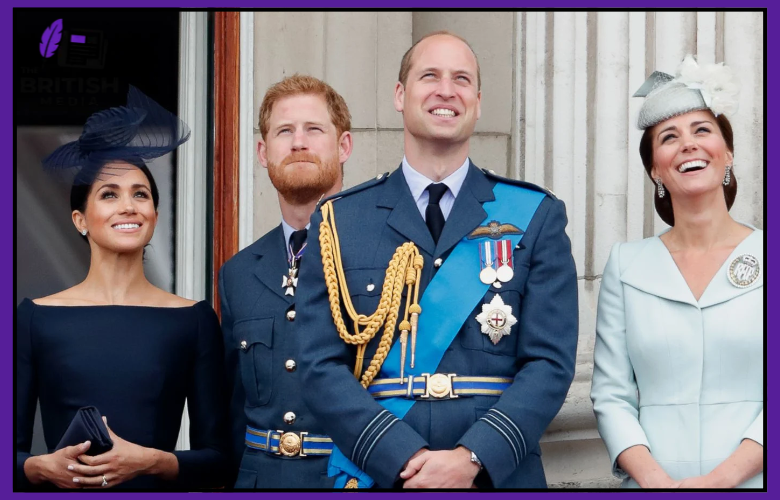
The British royal family is the family of King Charles III, the reigning monarch of the United Kingdom, and his relatives who form part of the modern monarchy. Its best-known members include Queen Camilla, William, Prince of Wales, Catherine, Princess of Wales, Prince Harry, and the younger generation of royal children.
The British royal family tree explains how these members are related, who stands in the line of succession and how royal titles pass through generations. It also helps readers understand the monarchy’s history, official duties, royal residences and financial arrangements. From Prince George, Princess Charlotte and Prince Louis to Prince Archie and Princess Lilibet, each person has a distinct place within the family. This guide covers the current members, family relationships, succession rules, royal wealth and key developments in 2026.
Who Is in the British Royal Family?
The British royal family includes King Charles III, Queen Camilla, the Prince and Princess of Wales, their children, the Duke and Duchess of Sussex and other relatives. However, not every family member carries out official royal duties. Senior working royals represent the monarch at public engagements, while other relatives lead independent lives.
King Charles III became king on 8 September 2022 after the death of Queen Elizabeth II. As head of state, he performs constitutional and ceremonial duties, meets the Prime Minister and hosts visiting leaders. Meanwhile, the elected government and Parliament remain responsible for governing the country.
Queen Camilla supports the King through charitable work, official visits and public engagements. William, Prince of Wales, is the heir to the throne and one of the monarchy’s most prominent representatives. Catherine, Princess of Wales, also undertakes public work, with interests including early childhood development and family wellbeing.
Prince Harry, Duke of Sussex, is the King’s younger son. He and Meghan stepped back from their roles as senior working royals in 2020. Although they remain connected to the royal family, they no longer undertake regular official duties on the monarch’s behalf.
The wider family includes Princess Anne, Prince Edward, Princess Beatrice, Princess Eugenie, Zara Tindall, Peter Phillips and their children. Their royal titles, public roles and places in the succession differ according to their family relationships and the rules of the monarchy.
British Royal Family Tree and Family Relationships
The British royal family tree shows how the current monarch connects to previous generations and the wider family. King Charles III was the eldest child of Queen Elizabeth II and Prince Philip, Duke of Edinburgh. His sons, William and Harry, belong to the next generation of the direct royal line.
Charles married Lady Diana Spencer in 1981. They had two sons, Prince William, born in 1982, and Prince Harry, born in 1984. The couple separated in 1992 and later divorced. Diana died in 1997. Charles married Camilla Parker Bowles in 2005, and she became Queen Camilla when he became king.
William married Catherine Middleton in April 2011. Their three children are Prince George, Princess Charlotte and Prince Louis. They follow William in the line of succession in that order.
Harry married Meghan Markle in May 2018. Their children are Prince Archie and Princess Lilibet, who follow Harry in the succession order.
King Charles also has three siblings: Anne, the Princess Royal; Andrew Mountbatten Windsor; and Prince Edward, Duke of Edinburgh. Their children and grandchildren form part of the extended family.
Princess Anne’s children, Zara Tindall and Peter Phillips, do not hold royal titles. By contrast, Princess Beatrice and Princess Eugenie are daughters of Andrew Mountbatten Windsor and Sarah Ferguson. These relationships explain why the extended family includes both titled royals and relatives who do not carry out official duties.
King Charles III and Queen Camilla
King Charles III was born on 14 November 1948. Before becoming monarch, he was known for decades as the Prince of Wales. During that time, he supported charities, undertook public engagements and promoted issues such as environmental protection and sustainable communities.
As king, Charles carries out constitutional and ceremonial responsibilities. These include meeting the Prime Minister, hosting state visits, attending national commemorations and formally opening Parliament. However, the monarch does not personally run the elected government.
Queen Camilla married Charles in 2005. As queen consort, she supports the King and undertakes official engagements in her own right. Her charitable interests include literacy, reading and support for survivors of domestic abuse.
Together, the King and Queen represent the monarchy at events across the United Kingdom and overseas. Their work also supports national ceremonies, diplomatic relationships and charitable causes.
Prince William, Catherine and Their Children
William, Prince of Wales, was born on 21 June 1982. He became heir to the throne when his father became king in September 2022. William is first in the line of succession.
William married Catherine Middleton at Westminster Abbey on 29 April 2011. She became the Princess of Wales when William received the title of Prince of Wales. Today, the couple are among the most visible members of the British royal family.
Their children are:
Prince George: Born on 22 July 2013, George is second in line to the throne. As the eldest child of the heir, he represents the next generation of the direct royal line.
Princess Charlotte: Born on 2 May 2015, Charlotte is third in the succession. Modern succession rules mean that she remains ahead of her younger brother, Prince Louis.
Prince Louis: Born on 23 April 2018, Louis is fourth in the line of succession.
The Wales children attract public interest because of their future connection to the monarchy. Nevertheless, their upbringing also involves education, family life and privacy.
Catherine supports work involving early childhood development, mental wellbeing and families. William champions charitable initiatives connected with homelessness, environmental issues and community wellbeing.
Prince Harry, Meghan Markle and Their Children
Prince Harry is the younger son of King Charles III and Diana, Princess of Wales. He married American actress Meghan Markle in May 2018, after which she became Meghan, Duchess of Sussex.
In January 2020, Harry and Meghan announced their decision to step back from their roles as senior working royals. They later established their lives in the United States and pursued independent projects.
Their children are Prince Archie, born in May 2019, and Princess Lilibet, born in June 2021. Both children belong to the wider royal family and remain in the line of succession.
Is Meghan Markle still a royal? Meghan remains connected to the royal family through her marriage to Harry and is known as the Duchess of Sussex. However, she does not carry out regular official duties as a working royal.
Harry also remains the King’s son and retains his place in the succession order. His decision to step back from royal duties did not automatically remove him or his children from the line of succession.
Other Members of the British Royal Family
The extended royal family includes relatives who support public causes or maintain independent careers.
Anne, the Princess Royal, is the only daughter of Queen Elizabeth II and Prince Philip. She is known for her extensive public schedule and her support for charities, sporting organisations and community projects.
Prince Edward, Duke of Edinburgh, is the youngest child of Queen Elizabeth II. He and Sophie, Duchess of Edinburgh, carry out official engagements and support charitable organisations.
Princess Beatrice and Princess Eugenie are daughters of Andrew Mountbatten Windsor and Sarah Ferguson. Both maintain careers and family lives outside the full-time working royal structure.
Zara Tindall has an established background in equestrian sport, while her brother, Peter Phillips, has pursued an independent professional career. Neither holds a royal title.
Not every royal relative represents the monarch. The distinction between family membership, royal titles and working duties is important when understanding the modern monarchy.
British Royal Family Line of Succession
The line of succession determines who is legally next in line to become monarch. Hereditary rules and legislation govern the order, rather than popularity or the number of official engagements a person undertakes.
As of October 2026, the first seven people in the succession order are:
- William, Prince of Wales
- Prince George of Wales
- Princess Charlotte of Wales
- Prince Louis of Wales
- Prince Harry, Duke of Sussex
- Prince Archie of Sussex
- Princess Lilibet of Sussex
Other members of the extended family follow them. The full order includes relatives from different branches of the family and can change when family circumstances or legal provisions require an update.
The Succession to the Crown Act 2013 introduced gender-neutral succession for people born after 28 October 2011. As a result, Princess Charlotte remains ahead of Prince Louis, even though he is male and younger.
The rules also include religious requirements. The monarch must be in communion with the Church of England. Therefore, the succession order operates as a legal system rather than a public vote.
British Royal Family History
The history of the British royal family spans centuries of dynasties, inheritance, political conflict and constitutional change. The modern royal house is known as the House of Windsor.
In 1917, King George V adopted the name Windsor, replacing Saxe-Coburg and Gotha during the First World War. The change gave the monarchy a British-sounding name at a time of conflict with Germany.
Queen Elizabeth II became monarch in 1952 and reigned for more than 70 years. Her reign covered major changes in British society, international relations, technology and the media. She became one of the most recognisable figures in modern royal history.
Prince Philip supported Elizabeth throughout her reign. Their four children were Charles, Anne, Andrew and Edward. Charles succeeded his mother in September 2022.
Over the years, the royal family has faced personal tragedies, public controversies and debates about the institution’s relevance and cost. These experiences have influenced public attitudes and encouraged changes in how the monarchy communicates.
Today, the monarchy combines historic ceremonies with a modern constitutional role. Members of the family attend national events, support charities, represent the United Kingdom overseas and participate in important commemorations.
British Royal Family Residences
Royal residences serve different purposes, including official ceremonies, administrative work and private family life. Their ownership arrangements also vary.
Buckingham Palace is the monarch’s principal official London residence. It hosts formal receptions, state occasions and other important events.
Windsor Castle is one of Britain’s best-known historic royal residences. It has strong links to generations of monarchs and continues to host official and ceremonial events.
Kensington Palace has housed several members of the royal family. The historic building contains private residences as well as areas open to visitors.
Sandringham Estate in Norfolk is privately owned by the monarch. The estate is closely associated with royal family gatherings, particularly around Christmas.
Balmoral Castle in Scotland has a long association with the royal family and held particular importance for Queen Elizabeth II.
However, not every royal residence belongs to the monarch personally. Some properties serve official purposes, while others have private ownership or separate management arrangements. It is therefore inaccurate to treat every palace or estate as the King’s personal property.
British Royal Family Net Worth and Funding
The British royal family’s net worth is a popular search topic, but no single verified figure represents the personal wealth of every family member. Online estimates may combine private assets, inherited wealth, property interests and public financial arrangements, although these categories are different.
King Charles receives income associated with the Duchy of Lancaster, alongside any personal assets and private income. Meanwhile, William, Prince of Wales, receives income associated with the Duchy of Cornwall.
The Sovereign Grant supports the monarchy’s official work, including staff costs, the maintenance of occupied royal palaces and official travel. It does not function as a personal salary for every member of the royal family.
The Crown Estate is another frequently misunderstood part of royal finances. It is not the monarch’s private property. Instead, its profits go to the Treasury under the legal arrangements governing the estate.
For the 2026–27 financial year, the Sovereign Grant was set at £137.9 million. Future funding arrangements may change under the relevant rules and official decisions.
Who Is Richer, King Charles or Prince William?
There is no definitive public comparison of King Charles and Prince William’s total personal wealth on a like-for-like basis. The King receives income associated with the Duchy of Lancaster, while William receives income associated with the Duchy of Cornwall.
However, the value of a duchy, the income it generates and a person’s personal wealth are separate measures. Public funding for official royal duties should not count as personal wealth.
For this reason, online estimates need careful interpretation. Without comparable definitions and reliable financial evidence, it is not possible to give a conclusive answer about which royal is richer.
British Royal Family Children and the Younger Generation
The younger generation represents the future of the British royal family. Prince George, Princess Charlotte and Prince Louis are the children of William and Catherine, while Prince Archie and Princess Lilibet are the children of Harry and Meghan.
Their positions in the family tree and the succession order differ. George is second in line to the throne, followed by Charlotte and Louis. Harry’s children follow their father in the succession.
The extended family also includes children of Princess Beatrice, Princess Eugenie, Zara Tindall and Peter Phillips. Their lives and public responsibilities vary, and not every child in the wider family holds a royal title.
Royal titles depend on established rules, family relationships and relevant decisions within the monarchy. Consequently, a royal connection does not automatically mean a child will undertake official duties .
The family must also balance public interest with children’s privacy. Royal children may appear at major ceremonies and family events, while their everyday lives remain largely private.
Royal Traditions and the Royal Bedtime Rule
Royal life is associated with formal ceremonies, etiquette, dress codes and long-standing household traditions. Some customs have clear public records, while others come from anecdotes, biographies or media reports.
One popular search concerns the so-called royal bedtime rule. There is no single official bedtime that applies to every member of the British royal family. Individual routines can vary according to age, health, travel, work commitments and personal preferences.
Therefore, readers should not treat a story about one royal’s routine as a rule for the entire family unless reliable evidence supports the claim. The same caution applies to reports about private meals, household habits and personal conversations.
Public traditions are easier to verify. These include state visits, the State Opening of Parliament, investitures, national commemorations and formal royal ceremonies. Such events remain an important part of the monarchy’s constitutional and ceremonial role.
British Royal Family News in 2026
The British royal family continues to undertake public engagements in the United Kingdom and overseas. During October 2026, King Charles III and Queen Camilla took part in official activities, including engagements connected with Wales and diplomatic relations.
An autumn tour involving The Bahamas, Guyana and Antigua and Barbuda was scheduled from 27 October to 4 November 2026. Through overseas tours, senior royals represent the monarch, recognise shared connections and strengthen relationships with countries and communities.
Other activities during the year have included commemorations, meetings with international leaders and events linked to charities and public institutions. Together, these engagements show how the monarchy combines long-standing ceremonies with public service.
Royal news can change quickly, particularly when announcements concern family events, health, titles, official visits or public duties. Readers should therefore separate confirmed announcements from rumours and unverified reports.
When checking a recent royal story, the date, the people involved and the official purpose of the event all matter. This approach is particularly useful for reports about succession, finances or the status of a royal family member.
ALSO READ:Romesh Ranganathan Wife Leesa and Their Life Away From Fame
Frequently Asked Questions
Who Is the Current Head of the British Royal Family?
King Charles III is the reigning monarch. He became king on 8 September 2022 after Queen Elizabeth II died. His responsibilities include constitutional and ceremonial duties, representing the United Kingdom at official events and supporting the continuity of the monarchy.
Who Is the 14-Year-Old Member of the British Royal Family?
The answer depends on the date and the person being discussed. As of October 2026, Prince George is 13 years old. Born on 22 July 2013, he will turn 14 in July 2027. A search referring to a 14-year-old royal may relate to an earlier date or another member of the wider family.
Is Meghan Markle Still a Royal?
Meghan remains connected to the royal family through her marriage to Prince Harry and is known as the Duchess of Sussex. However, she and Harry stepped back from their roles as senior working royals in 2020. They no longer undertake regular official duties on behalf of the monarch.
Who Is First in Line to the British Throne?
William, Prince of Wales, stands first in the line of succession. His eldest child, Prince George, follows him, with Princess Charlotte and Prince Louis next. Prince Harry comes after William’s three children in the succession order.
Who Is Richer, King Charles or Prince William?
There is no definitive, publicly verified comparison of their total personal wealth. King Charles receives income associated with the Duchy of Lancaster, while Prince William receives income associated with the Duchy of Cornwall. Since these arrangements differ, estimates depend on how wealth is defined.
What Is the Royal Bedtime Rule?
No single official bedtime rule applies to the entire . Stories about individual routines may come from interviews, biographies or media reports. However, readers should not present these accounts as universal royal policy without reliable evidence.
How Many Children Are in the British Royal Family?
There is no single fixed number covering every child in the extended royal family. The best-known children in the direct line include Prince George, Princess Charlotte, Prince Louis, Prince Archie and Princess Lilibet. Other royal relatives also have children.
Conclusion
The British royal family combines centuries of history with a modern constitutional role. King Charles III leads the monarchy, while William, Prince of Wales, stands as his heir and represents the next generation of prominent royals. The wider family includes Queen Camilla, Catherine, Princess of Wales, Prince Harry, Meghan, Princess Anne, Prince Edward and many other relatives with different responsibilities.
Understanding the British royal family tree clarifies their relationships, titles and places in the line of succession. Royal finances also need careful explanation because public funding, duchy income and personal wealth are separate matters. Meanwhile, official ceremonies, overseas visits and charitable engagements continue to shape the monarchy’s place in British life in 2026.