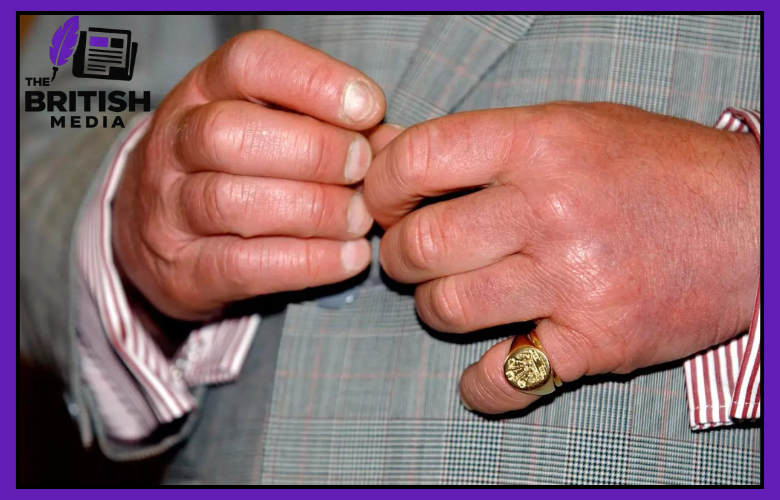
King Charles III has attracted public attention for many reasons, but one surprisingly persistent search topic concerns the appearance of his hands. Photographs have repeatedly shown the monarch with fingers that can look red, rounded or swollen, prompting searches about King Charles fingers, his so-called “sausage fingers” and whether the appearance could indicate a health condition.
The subject has been discussed for years, yet there is an important distinction between what can be observed and what can actually be medically established. King Charles has himself joked about having “sausage fingers”, while his unusual-looking hands were reportedly noticeable from infancy. However, there is no publicly confirmed diagnosis explaining the appearance.
So, why do his hands sometimes look swollen? What does “sausage fingers” mean medically, and can photographs really reveal an underlying condition? Here is what the evidence tells us.
Why Do King Charles’s Fingers Look Swollen?
Photographs of King Charles have frequently shown his fingers looking larger and puffier than people might expect. The appearance has been particularly noticeable during public engagements, official ceremonies and overseas visits.
However, the appearance is not necessarily evidence of a serious medical problem. Fingers can look different depending on temperature, circulation, hand position, hydration, activity and even the angle and lighting of a photograph.
Medical experts have previously discussed several possible explanations for visibly puffy fingers, including fluid retention and inflammation. Importantly, those explanations were general medical possibilities rather than a confirmed diagnosis for the King.
The safest conclusion is therefore that his hands have sometimes appeared swollen in photographs, while the specific reason remains publicly unconfirmed.
What Are King Charles’s Sausage Fingers?
The phrase “sausage fingers” is an informal description used to describe fingers that appear unusually thick, rounded or swollen. It is not itself a medical diagnosis.
The medical term dactylitis describes inflammation that can cause an entire finger or toe to become swollen, producing the characteristic sausage-like appearance. Dactylitis can occur alongside several inflammatory conditions, including some forms of arthritis.
That does not mean King Charles has dactylitis. The term has become associated with photographs of his hands because of their appearance, but a photograph cannot establish whether dactylitis is actually present.
This distinction is particularly important online, where a descriptive phrase can easily become confused with a confirmed medical diagnosis.
Has King Charles Always Had Large Fingers?
Interestingly, the discussion about the King’s hands did not begin when he became monarch.
Reports about his hands go back to his birth in 1948. Queen Elizabeth II reportedly commented in a letter that her newborn son had unusually large hands with long fingers. Charles later used similar language when referring to Prince William as a baby, joking that his son had “sausage fingers” like his own.
This historical detail provides useful context. The appearance of his hands has apparently been noticeable for much of his life rather than suddenly emerging in old age.
That does not explain the precise anatomy or any changes that may occur from time to time. It does, however, make it misleading to assume that every photograph showing larger-looking fingers represents a newly developed health problem.
What Can Cause Swollen Fingers?
Swollen fingers can have many different causes. Some are temporary and relatively harmless, while others can be associated with medical conditions requiring assessment.
Possible explanations for finger swelling include:
- Fluid retention, also called oedema
- Inflammation around joints or soft tissue
- Arthritis, including inflammatory forms
- Injury or physical trauma
- Changes in temperature
- Medication side effects
- Allergic reactions
- Certain autoimmune conditions
- Infections affecting the fingers or surrounding tissues
Medical sources discussing the King’s hands have highlighted both oedema and inflammation as possible explanations for swollen-looking fingers. But these possibilities should not be presented as a diagnosis of the monarch.
The same visible symptom can have completely different causes in different people.
Could Oedema Explain the Appearance?
Oedema is one of the explanations frequently mentioned when discussing swollen hands. It occurs when excess fluid builds up in body tissues, potentially causing areas such as the hands, fingers, feet or ankles to become puffy.
The appearance can vary considerably. In some circumstances, swelling may be temporary and influenced by factors such as prolonged positioning, heat, diet or other physical changes.
The Independent previously noted that medical professionals had suggested oedema as one possible explanation for the appearance of the King’s hands. However, this was not confirmation that Charles himself has oedema.
That distinction matters because online discussions often turn a possible explanation into an assumed diagnosis. There is currently no sound basis for doing that simply from photographs.
Could Arthritis Be Responsible?
Arthritis is another condition commonly mentioned when people discuss swollen fingers. Certain forms of arthritis can cause inflammation around joints, leading to swelling, stiffness, discomfort and changes in the appearance of the hands.
Dactylitis can also be associated with inflammatory arthritis, including psoriatic arthritis. Other conditions can produce similar symptoms, which is why medical professionals consider a person’s complete symptoms and history rather than relying on appearance alone.
There is no public confirmation that arthritis explains the appearance of King Charles’s fingers.
It would therefore be inaccurate to write that the monarch has arthritis simply because his hands sometimes look swollen. A responsible explanation should acknowledge arthritis as one possible cause of swollen fingers in general, rather than attributing it to Charles without evidence.
Why Do His Fingers Sometimes Look Red?
The colour of the hands can change for several reasons, making photographs particularly difficult to interpret.
Temperature is one factor. Cold environments can affect circulation and skin colour, while warmth can contribute to visible changes in the hands. Physical activity, positioning and temporary changes in blood flow can also influence appearance.
Lighting and photography create another complication. A close-up image taken in bright or unusual lighting can make redness appear considerably stronger than it would in person.
Some medical conditions can also cause redness alongside swelling. That is why medical professionals look at symptoms together rather than treating one visible feature as proof of a particular illness.
For King Charles, there is simply not enough publicly available clinical information to identify the precise reason for the colour or size of his fingers.
When Did the Sausage Finger Discussion Become Famous?
Although the appearance of Charles’s hands has been noticed for decades, the subject became particularly prominent online after photographs circulated widely on social media.
A widely discussed photograph from 2019 helped fuel renewed interest, while images from royal engagements in subsequent years continued to generate comments about the monarch’s hands. His fingers also attracted significant attention during a 2021 visit to Clapham Old Town, when he was photographed pulling a pint.
The internet then turned the observation into a recurring phrase: “sausage fingers”.
Charles himself has previously joked about the description, meaning the expression is not entirely an invention of social media users. However, the popularity of the phrase should not be confused with medical evidence.
What Has King Charles Said About His Fingers?
One of the most interesting aspects of the story is that King Charles has acknowledged the distinctive appearance of his hands himself.
According to reporting about a documentary covering his coronation, Prince William joked about his father’s fingers while discussing his ceremonial clothing. Charles responded humorously by referring to his own “sausage fingers”.
Earlier accounts also report that Charles used the same phrase when describing Prince William as a baby.
These comments are significant because they show that the unusual appearance of his fingers is not simply an invention created by recent social media speculation. At the same time, joking about the appearance does not provide a medical explanation for it.
The King has not publicly confirmed a specific condition responsible for his hands.
Can You Diagnose King Charles From Photographs?
No. A photograph can show a physical feature, but it cannot establish its underlying medical cause.
A proper medical assessment would consider factors that cannot be seen in a photograph. These could include how long swelling has been present, whether it changes during the day, whether it causes pain or stiffness, whether both hands are affected and whether there are other symptoms.
Doctors may also consider medical history, medication and lifestyle factors before deciding whether further investigation is necessary.
This is why claims that a photograph “proves” that King Charles has a particular disease should be treated cautiously. Medical professionals quoted about the subject have discussed possible explanations, but those comments should not be confused with a clinical examination of the monarch.
What Is Actually Known About King Charles’s Hands?
The available information allows several points to be separated from speculation.
What is reasonably established includes:
- His hands have attracted public attention for many years.
- Historical accounts indicate that his large hands were noticeable when he was a baby.
- Charles has personally joked about having “sausage fingers”.
- Photographs have repeatedly shown fingers that can appear swollen or rounded.
- Medical experts have discussed possible causes such as oedema and inflammation.
- There is no publicly confirmed diagnosis explaining the appearance of his fingers.
- Photographs alone cannot establish whether he has dactylitis, arthritis or another condition.
This distinction makes the subject much easier to understand.
Rather than asking which disease the King “must” have, the more accurate question is what can cause fingers to look this way and what information is actually available about Charles himself.
ALSO READ:Who Is Lee Mack Wife? Everything You Need to Know About Tara McKillop
Why Do People Search for King Charles Fingers?
The search interest comes from a combination of royal curiosity, unusual photographs and health-related speculation.
Members of the Royal Family are photographed constantly, so even relatively ordinary physical characteristics can receive considerable attention. In Charles’s case, the distinctive appearance of his hands has become recognisable enough to generate its own recurring internet discussion.
Searches also reflect a broader interest in whether visible changes can reveal someone’s health. People commonly look at photographs of celebrities and public figures and try to identify possible medical explanations.
However, visible symptoms are rarely as straightforward as they appear online. Swelling can have numerous causes, and the same appearance can occur in people with completely different health backgrounds.
That is why reliable information should focus on what is documented while clearly labelling medical possibilities as possibilities.
Is It Worth Reading About King Charles’s Fingers?
Yes, if the aim is to understand the facts rather than confirm an internet theory.
The subject offers an interesting example of how celebrity and royal health stories develop online. A photograph creates curiosity, social media gives the feature a memorable nickname, and medical terminology is then introduced to explain what people think they are seeing.
The valuable part is learning the difference between terms such as oedema, inflammation and dactylitis, and understanding that each has a different meaning.
What is not worthwhile is treating speculation as a confirmed diagnosis.
For readers, the best approach is straightforward: recognise that Charles has distinctive-looking hands, understand the possible medical explanations for swollen fingers, and avoid claiming that one specific condition is responsible without reliable evidence.
Frequently Asked Questions
Why do King Charles’s fingers look swollen?
His fingers have sometimes appeared red, rounded or swollen in photographs. Several general medical explanations are possible, including fluid retention and inflammation, but there is no publicly confirmed diagnosis explaining the appearance.
Does King Charles have sausage fingers?
“Sausage fingers” is an informal description of fingers that look swollen and rounded. Charles has reportedly used the phrase himself when joking about his hands, but it is not a medical diagnosis.
What is dactylitis?
Dactylitis is inflammation that can cause an entire finger or toe to become swollen, creating a sausage-like appearance. It can occur with several inflammatory conditions, including certain forms of arthritis.
Does swollen fingers always mean arthritis?
No. Swelling can have many causes, including oedema, injury, temperature changes, medication effects, inflammation and other medical conditions.
Has King Charles confirmed why his fingers are swollen?
No specific medical explanation for the appearance of his fingers has been publicly confirmed. Claims that identify a particular disease should therefore be treated as speculation rather than established fact.
Conclusion
The fascination surrounding King Charles fingers has lasted for years because photographs can sometimes show the monarch with unusually rounded, red or swollen-looking hands. The nickname “sausage fingers” has become part of the public conversation, and Charles himself has reportedly joked about the description. Historical accounts also suggest that his distinctive hands have been noticeable since childhood.
However, there is an important difference between observing a physical feature and diagnosing its cause. Conditions such as oedema, inflammation and dactylitis can produce swollen-looking fingers, but none can be attributed to the King simply by examining photographs.
The most reliable conclusion is therefore that his hands have a distinctive appearance, while the precise medical reason has not been publicly established. That approach provides a more accurate answer than repeating unverified theories and keeps the discussion grounded in evidence rather than speculation.