Charmian Powell was the first wife of Ronnie Biggs, the British criminal who became internationally famous after the 1963 Great Train Robbery and his dramatic escape from prison. Yet her own life was far more complex than her connection to one of Britain’s most notorious fugitives.
Born on 17 May 1939, she married Biggs in 1960 and became a mother of three sons. His conviction, prison escape and subsequent flight overseas transformed the family’s future.
She eventually followed him to Australia, where she experienced police attention, media scrutiny and devastating personal loss. After their divorce, she became known as Charmian Brent and established an independent career in publishing and editing. Her remarkable experiences later inspired the ITV drama Mrs Biggs. She died in Box Hill, Victoria, on 11 December 2014, aged 75.
Who Was Charmian Powell
Charmian Powell was an English woman whose life became closely connected with one of the most famous criminal cases in British history.
She was born on 17 May 1939 in Reigate, Surrey. Her father, Bernard Powell, was a school headmaster, and her early upbringing was far removed from the criminal world associated with her future husband.
She met Ronnie Biggs when she was 17. Despite concerns from her family about the relationship, the couple remained together and eventually married.
Her story is particularly interesting because her life with Biggs began several years before the Great Train Robbery. She was already his wife and the mother of his children when his criminal activities transformed their family life.
Charmian Powell Early Life and Family Background
She grew up in Surrey in a respectable family environment. Her father’s work as a school headmaster gave her an upbringing that was very different from the life she would later experience alongside Biggs.
Her relationship with him developed while she was still a teenager. Biggs had already encountered problems with the law, but she believed he could eventually move away from crime.
That belief became an important part of her later story. She entered the marriage expecting a family life rather than the international notoriety that would eventually surround her husband.
The contrast between her early life and what followed is one of the most striking elements of her biography.
How She Met Ronnie Biggs
She met Biggs at the age of 17. Their relationship continued despite objections from her family, who were reportedly concerned about his background.
For the young couple, the relationship was initially a personal story rather than a public one. Biggs was not yet the internationally recognised fugitive he would later become.
They eventually married in 1960. Their early married life included raising children and attempting to establish a stable home.
Everything changed when Biggs became involved in the robbery that would make his name famous.
Marriage to Ronnie Biggs
The couple married in 1960, three years before the Great Train Robbery.
They went on to have three sons. During the early years of their marriage, she believed that family responsibilities would encourage her husband to leave his criminal past behind.
That expectation was shattered by his involvement in the 1963 robbery of a Royal Mail train.
Biggs was eventually convicted and sentenced to 30 years in prison. His imprisonment left his wife raising their children while he was behind bars.
For the family, the consequences of the crime were therefore immediate. The robbery was not simply a historical event involving criminals and stolen money; it changed the lives of the people closest to them.
Did She Know About the Great Train Robbery
One of the most commonly asked questions is whether she knew about the robbery before it happened.
Her own account was that she did not know about Biggs’s involvement. She later described being shocked when she discovered what had happened and learned that he had received money from the crime.
She had believed that Biggs would stay away from criminal activity. Her understanding of their marriage was therefore very different from the public image that developed around him.
It is important not to confuse association with participation. She was Biggs’s wife, but she was not convicted of taking part in the Great Train Robbery.
Her perspective instead reveals how the consequences of a major crime reached into an ordinary family.
What Happened After Ronnie Biggs Escaped From Prison
Biggs escaped from Wandsworth Prison in July 1965 while serving his 30-year sentence.
The escape transformed him into an international fugitive. He eventually travelled overseas, and his family later followed him to Australia.
For his wife, the decision to leave Britain involved more than simply following a wanted man. She was also trying to keep her children connected to their father.
The move meant abandoning the familiar environment of Britain and beginning again in another country.
Australia would initially appear to offer the family a chance to live quietly, but Biggs’s criminal past continued to follow them.
The Family’s Move to Australia
The family travelled to Australia in 1966 and eventually settled in Melbourne.
Biggs worked as a carpenter, while his wife worked night shifts at a biscuit factory. Their third son was born during their Australian years.
For a period, the family managed to live a relatively ordinary existence. They socialised with other families and attempted to build a stable home.
However, Biggs remained a wanted man. Once authorities became aware that he was living in Melbourne, the family’s sense of security began to disappear.
Australia became an important chapter in the story, but it did not provide the permanent escape they had hoped for.
What Happened in Melbourne
The Melbourne years became increasingly difficult after authorities began searching for Biggs.
When he went into hiding, police attention also turned towards his family. His wife was arrested and temporarily separated from her children.
The incident attracted considerable media attention. She suddenly found herself at the centre of a story that had begun with her husband’s criminal actions.
The publicity was intrusive, but it also created a practical opportunity. She sold her story to the Australian media, receiving a substantial payment that helped her secure a home and greater financial stability.
Her experience illustrates the complicated role of the press in her life. Public attention caused distress, but it could also provide resources at a time when she needed them.
Charmian Powell Children and Family Life
She and Ronnie Biggs had three sons.
Their children experienced a childhood unlike that of most families. Their father was imprisoned, escaped from custody and eventually left Australia for Brazil.
The family also suffered an unimaginable tragedy when their eldest son, Nicky, died in a car accident at the age of eight.
She was driving the vehicle when the accident happened. The loss had a profound effect on her and became one of the most painful events of her life.
Her two surviving sons later established professional lives of their own. The family’s experiences demonstrate how the consequences of a famous criminal case can continue long after the original crime.
The Tragic Death of Her Son Nicky
The death of Nicky was a devastating personal loss.
He died in Melbourne when he was only eight years old. His mother was driving the car involved in the accident.
The tragedy was made even more painful by the reaction of some members of the public. She later received cruel correspondence from people who blamed her for what had happened.
This period marked an important turning point.
With encouragement from friends, she eventually returned to education. University gave her a new direction and helped her establish an identity that was increasingly separate from the events surrounding Biggs.
Why She Became Known as Charmian Brent
After her marriage ended, she changed her name by deed poll and became known as Charmian Brent.
The change was significant because the Biggs name had become strongly associated with crime, prison escape and international publicity.
Using a different surname helped create distance between her personal and professional life and the notoriety surrounding her former husband.
Under the name Brent, she developed a career in publishing and editing.
For researchers today, both names are therefore important. The earlier name is closely associated with her marriage, while Charmian Brent represents the independent life she built afterwards.
Charmian Brent Education and Career
Education became an important route towards independence.
She studied English at the University of Melbourne and achieved first-class honours. She later worked in publishing, editing and journalism.
Her professional achievements are often overlooked because so much attention remains focused on Ronnie Biggs.
Yet her career demonstrates that her life continued to develop long after the marriage ended. She built expertise in an area completely separate from the criminal world associated with her former husband.
Literature also became an important part of her later life. She took part in literary discussions and maintained strong intellectual interests.
This quieter chapter provides a striking contrast with the years when newspapers followed her family’s movements.
What Happened After the Divorce
The marriage ended in divorce in 1976.
By that stage, Biggs was living in Brazil and had established a separate relationship. She remained in Australia and concentrated on raising her children and developing her own career.
Divorce gave her an opportunity to create a more independent life, although her connection to Biggs did not disappear completely.
Their shared history, children and extraordinary experiences meant that some form of contact continued.
Her life after the divorce is particularly significant because she increasingly became known for her own work rather than simply her relationship with the former fugitive.
Did She Ever Reunite With Ronnie Biggs
Although the marriage ended, the two did meet again later in life.
She travelled to Brazil in 1997 and spent time with Biggs. Their relationship by then was very different from the marriage they had shared decades earlier.
There was no simple return to married life. Instead, their meetings reflected the complicated connection between two people who had spent years together and raised a family.
Their continued contact also shows why the story cannot easily be reduced to a straightforward tale of betrayal and separation.
Biggs remained part of her history, but he was no longer the centre of her everyday life.
The Story Behind Mrs Biggs
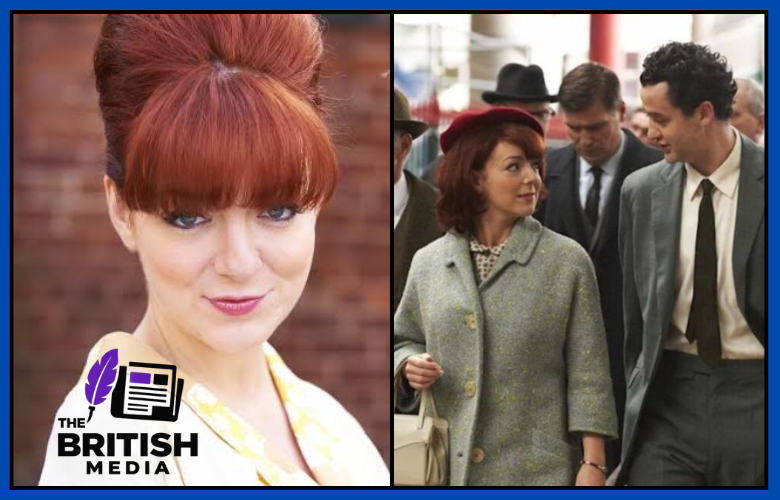
Her extraordinary experiences eventually became the basis for the ITV drama Mrs Biggs.
The five-part series was broadcast in 2012 and starred Sheridan Smith as the central character and Daniel Mays as Ronnie Biggs.
Rather than concentrating only on the Great Train Robbery, the drama explored the relationship, marriage, children, imprisonment, escape and the family’s years in Australia.
The real-life woman behind the story was involved in the production and provided personal material that helped inform the programme.
That involvement made the drama particularly significant because it brought her perspective into a story that had traditionally been dominated by the image of Biggs himself.
Sheridan Smith as Charmian in Mrs Biggs
Sheridan Smith played the lead role in Mrs Biggs.
Her performance received major recognition and earned her the BAFTA Television Award for Best Actress.
The portrayal focused on the emotional consequences of living with a fugitive husband and raising children in extraordinary circumstances.
For many viewers, the programme was their first introduction to the family side of the Ronnie Biggs story.
It also helped shift attention away from the romanticised image of the Great Train Robbery and towards the personal consequences of the events.
How Accurate Is Mrs Biggs
Mrs Biggs is based on real events, but it is a television drama rather than a documentary.
The major events correspond broadly with the historical record, including the marriage, Great Train Robbery, imprisonment, escape, Australia and divorce.
However, conversations and private scenes are necessarily recreated for dramatic purposes.
The involvement of the real-life subject gives the production additional value, particularly because she contributed personal material and advice.
Even so, viewers researching the historical record should distinguish between dramatised scenes and independently documented facts.
Where Did She Live Later in Life
Australia became her long-term home.
After the difficult years surrounding Biggs’s escape, she eventually established a much quieter life there.
She worked, studied, raised her children and developed interests in literature and education.
Melbourne therefore became more than the setting for the family’s difficulties. It became the place where she rebuilt her identity.
Her later life was considerably removed from the international publicity that had surrounded Biggs during his years as a fugitive.
When Did Charmian Powell Die
She died on 11 December 2014 at the age of 75.
Her death occurred in Box Hill, Victoria, Australia. Reports of her death were published later in December, which has caused some confusion in online biographies.
The distinction is important. A news report published on 30 December should not automatically be interpreted as evidence that she died on that date.
By the time of her death, she had spent decades living independently of her former husband’s criminal career.
Her final years were far removed from the dramatic events that had dominated the earlier part of her life.
Her Age at Death and Final Years
She was 75 when she died.
Born in May 1939, she lived through a remarkable period that took her from post-war Surrey to Australia and eventually into a professional career in publishing.
Her later years were comparatively private.
Literature, education, family and friendships became more important than the criminal notoriety surrounding her former husband.
That transformation is one of the strongest reasons her biography deserves attention in its own right.
Her life did not end with the Great Train Robbery story. In many ways, the most interesting chapter came after the headlines had faded.
Why Her Story Still Matters
The enduring interest in her life comes from the difference between public mythology and private experience.
The Great Train Robbery is often remembered through the criminals, stolen money, prison sentences and Biggs’s spectacular escape.
Her experience reveals another side of that history.
She was a wife and mother who said she did not know about the robbery beforehand. She then faced imprisonment, international travel, police attention, media scrutiny, family tragedy and the breakdown of her marriage.
Later, she rebuilt her life through education and professional work.
Her biography therefore has value beyond true crime. It shows how a major criminal event can affect families and how someone can eventually create an identity independent of a notorious association.
Key Facts About Charmian Powell
- Born: 17 May 1939
- Died: 11 December 2014
- Age at death: 75
- Birthplace: Reigate, Surrey, England
- Place of death: Box Hill, Victoria, Australia
- Husband: Ronnie Biggs
- Marriage: 1960–1976
- Children: Three sons
- Later name: Charmian Brent
- University: University of Melbourne
- Career: Editor, publisher and journalist
- Known for: Her marriage to Ronnie Biggs and connection to the Great Train Robbery
- Television drama: Mrs Biggs
- Portrayed by: Sheridan Smith
Frequently Asked Questions
Who was Ronnie Biggs’s first wife?
Ronnie Biggs’s first wife was Charmian Powell. They married in 1960 and had three sons before divorcing in 1976.
How many children did Ronnie Biggs and his first wife have?
They had three sons. Their eldest son, Nicky, tragically died in a car accident at the age of eight.
Did Ronnie Biggs’s wife know about the Great Train Robbery?
She said that she did not know about his involvement before the robbery and was shocked when she discovered what had happened.
Why did she become known as Charmian Brent?
After divorcing Biggs, she changed her name by deed poll and used the surname Brent. She subsequently built her own professional life in Australia.
What did Charmian Brent do for a living?
She studied English at the University of Melbourne and later worked in publishing, editing and journalism.
When did Ronnie Biggs’s first wife die?
She died on 11 December 2014, aged 75, in Box Hill, Victoria, Australia.
Is Mrs Biggs based on a true story?
Yes. The ITV drama Mrs Biggs is based on the real relationship and experiences surrounding Ronnie Biggs and his first wife, although some scenes and conversations were dramatised for television.
Conclusion
The story of Charmian Powell is much broader than her identity as Ronnie Biggs’s first wife. She was a young woman from Surrey who married Biggs before the Great Train Robbery, raised three sons and eventually followed her husband to Australia after his escape from prison. There, she faced police attention, media pressure and one of the deepest tragedies imaginable with the death of her eldest son.
Yet her later life tells an equally important story. After divorcing Biggs, she became Charmian Brent, studied English at university and established a career in publishing and editing. Her interests in literature and education helped create an identity far removed from the criminal notoriety surrounding her former husband.
Her experiences eventually inspired Mrs Biggs, bringing this lesser-known side of the Great Train Robbery to television audiences. She died in Australia on 11 December 2014, aged 75. Her lasting significance lies not simply in who she married, but in how she rebuilt her life after extraordinary circumstances.