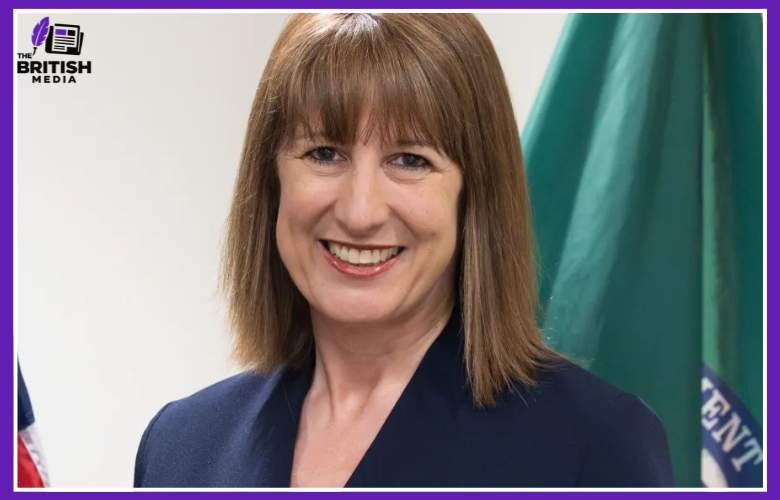
Rachel Reeves remains an important figure in British politics despite leaving her position as Chancellor of the Exchequer in July 2026. Her recent comments on Brexit, Britain’s future relationship with the European Union and the country’s economic direction have brought her back into the headlines. She has also taken up an unpaid guest lecturer position at Harvard University’s Institute of Politics, giving her a new platform outside Westminster.
Her departure from the Treasury marked a major change in her political career, but it did not end her involvement in national debates. Reeves remains a Labour MP and continues to speak about economic growth, trade, investment and Britain’s international relationships. Her latest statements have also attracted attention because they overlap with some of Prime Minister Andy Burnham’s priorities. Here is what she is doing now and what could happen next.
What Is the Latest Rachel Reeves News?
The latest Rachel Reeves news centres on her comments about Brexit, her new role at Harvard University and her political position after leaving the Treasury.
On 1 November 2026, Reeves argued that Britain’s long-term future should be within the European Union. She said Brexit had made the country poorer, weaker and less secure. Her comments attracted attention because they represented one of her most significant public interventions since leaving the Chancellor’s position in July.
She also welcomed the willingness of Prime Minister Andy Burnham to discuss Britain’s relationship with Europe. Reeves believes the country should have an honest debate about the economic and practical benefits of closer integration.
Her Harvard appointment is another important development. She has taken up an unpaid guest lecturer role at the university’s Institute of Politics, where she can share her experience of government and economic policy.
Although she no longer manages the Treasury, Reeves remains a Labour MP for Leeds West and Pudsey. Her latest comments show that she intends to remain involved in political discussions about Britain’s economy and international future.
Why Did Rachel Reeves Leave the Treasury?
Rachel Reeves left her position as Chancellor of the Exchequer on 20 July 2026, when Andy Burnham became Prime Minister and formed his government. She had held the role since Labour entered government on 5 July 2024.
As Chancellor, Reeves was responsible for the government’s approach to public spending, taxation, borrowing, investment and economic growth. Her decisions affected businesses, households, public services and the wider financial markets.
Her time at the Treasury involved difficult economic choices. The government faced pressure to improve public services, support investment, manage public debt and respond to the cost of living. Reeves also had to explain the government’s financial decisions to Parliament and the public.
Her departure came as part of the change in government leadership under Burnham. John Healey took over the Chancellor’s position, while Reeves moved away from the daily responsibility of managing the nation’s finances.
Leaving the Treasury did not mean that Reeves left politics. She remained an elected Labour MP and continued to express her views on important national issues.
Her experience as the UK’s former Chancellor also gives her a different perspective on economic debates. She can now discuss the government’s direction without carrying direct responsibility for its Treasury decisions.
What Did Rachel Reeves Say About Brexit?
One of the most important recent developments has been Reeves’s criticism of Brexit and her support for a closer relationship between Britain and the European Union.
In an article published in the Sunday Times on 1 November 2026, she argued that Britain’s future should be within the EU. She described Brexit as having made the UK poorer, weaker and less secure.
Her comments reflect concerns about the economic consequences of leaving the European Union. Since the end of the transition period, British businesses have faced additional requirements when trading with European markets. Changes to customs arrangements, regulations and the movement of workers have also affected different industries.
Reeves believes supporters of closer European integration must explain how it would improve people’s lives. She has argued that political leaders should focus on practical benefits rather than relying on general statements about the advantages of EU membership.
Her position is significant because Labour’s 2024 general election manifesto ruled out returning to the single market, customs union or free movement. Her latest comments therefore reopen questions about how far Britain should go in rebuilding its relationship with Europe.
However, her personal views should not be confused with an official government decision. Britain has not announced a formal plan to rejoin the European Union. Any move towards membership would require a major political decision, negotiations and public debate.
Does Rachel Reeves Support Britain Rejoining the European Union?
Yes. Reeves has publicly argued that Britain’s long-term future should be within the European Union. Her comments suggest that she believes closer integration could bring economic and political advantages.
She has also supported a more open discussion about the consequences of Brexit. Rather than treating the current relationship as permanent, she believes Britain should consider whether a closer partnership would better serve its long-term interests.
There are several possible levels of UK-EU cooperation, and they should not be treated as the same thing.
Closer cooperation could involve agreements on trade, research, security, education and business. A customs union would create a common external tariff arrangement for covered goods. Single market participation would involve a wider system of shared rules and obligations.
Full EU membership would be a much bigger step. It would involve accepting the rights and responsibilities of membership, alongside negotiations over the UK’s position within the European institutions.
Reeves’s comments support eventual membership, but they do not mean that Britain is currently preparing to rejoin. The government would need to decide its approach and explain the economic and political consequences to the public.
What Has Rachel Reeves Said About Andy Burnham?
Rachel Reeves has welcomed Andy Burnham’s willingness to discuss Britain’s relationship with the European Union. Their positions appear to overlap on the need for a more open debate about Brexit and the country’s economic future.
Burnham became Prime Minister on 20 July 2026, replacing Keir Starmer. His arrival brought a change in the government’s leadership and renewed attention to Labour’s economic priorities.
Reeves’s comments are particularly interesting because Burnham replaced her as Chancellor when he formed his government. Despite that change, she has expressed support for a more constructive discussion about Britain’s future relationship with Europe.
Both have shown interest in regional economic development and investment beyond London. Reeves’s time at the Treasury focused heavily on economic growth, while Burnham has also made regional development an important part of his political agenda.
However, agreement on particular policies does not mean Reeves has returned to government. She is not currently the Chancellor, and there has been no confirmed announcement of a new Cabinet appointment.
Her influence now comes through her parliamentary position, public statements and contribution to Labour’s wider political debate.
What Is the UK-EU Youth Mobility Scheme?
The proposed UK-EU youth mobility scheme is another important part of the debate surrounding Britain’s relationship with Europe.
The scheme is intended to create opportunities for eligible young people from the UK and EU countries to live, work or study in each other’s territories for a limited period.
The proposal formed part of the wider UK-EU reset agreed at the May 2025 summit. Negotiations continued during 2026, with both sides working towards an agreement for the next summit on 20 November 2026.
A youth mobility arrangement would not automatically restore the free movement rules that applied when Britain was an EU member. Instead, it would create a specific route for younger people, subject to agreed eligibility requirements and restrictions.
This distinction is important. Free movement allowed eligible EU citizens to live and work across member states under wider European rules. A youth mobility scheme would be more limited and would apply to people who meet its conditions.
Reeves has welcomed progress towards an agreement because she believes closer links with Europe could provide practical opportunities for younger generations.
However, negotiations involve several difficult questions. These include the number of people who could participate, the length of their stay, visa conditions and the treatment of EU students attending British universities.
The UK Parliament’s research briefing published on 9 November 2026 confirmed that negotiations were ongoing. It also reported that an announcement was expected at the 20 November summit. Until the two sides confirm the final terms, the scheme should not be described as an agreed or operational arrangement.
What Is Rachel Reeves Doing at Harvard University?
Rachel Reeves has taken up an unpaid guest lecturer position at Harvard University’s Institute of Politics. The appointment marks a new stage in her public and professional life after leaving the Treasury.
The role was approved under the government’s Business Appointment Rules, which apply to former ministers taking up outside positions. Reeves was permitted to begin the appointment from 20 October 2026 following the required waiting period.
Her responsibilities include delivering a lecture followed by a moderated question-and-answer session. She can also take part in private meetings with academic staff.
Her Harvard engagement gives her an opportunity to discuss economic policy, political leadership and her experience of government with an international audience.
The appointment also comes with restrictions designed to protect confidential government information and prevent conflicts of interest. Reeves must not disclose or use privileged information obtained during her time as a minister.
For two years after leaving office, she is also restricted from personally lobbying the UK Government or using former ministerial contacts on Harvard’s behalf. Further conditions apply to advising on bids or contracts directly related to UK Government work.
It is important to describe the appointment accurately. Reeves is an unpaid guest lecturer, not a permanent professor or a full-time member of Harvard’s academic staff.
The role does not replace her parliamentary responsibilities. She remains a Labour MP and can continue contributing to British political discussions.
What Is Rachel Reeves’s Economic Position Now?
Although Reeves no longer controls the Treasury, economic policy remains central to her public comments.
During her time as Chancellor, she focused on economic growth, investment, public finances and improving the UK’s business environment. She argued that stronger investment was necessary to support productivity and improve living standards.
Her economic approach also involved difficult decisions about taxation and public spending. These choices attracted support from some groups and criticism from others, particularly when households and businesses faced financial pressure.
Since leaving office, Reeves has continued to discuss the relationship between economic credibility and ambitious political change. Her recent comments suggest that she believes Britain needs a long-term economic strategy that addresses weak growth and strengthens international partnerships.
Her views on Europe form part of that wider argument. She believes closer economic links could help Britain improve trade opportunities and its position in the global economy.
However, her current position should be distinguished from the policies being introduced by Burnham’s government. Reeves can express her views and draw on her experience, but she is no longer responsible for setting the government’s economic policy.
Could Rachel Reeves Return to the Cabinet?
There is interest in whether Rachel Reeves could return to a senior government position in the future. Her experience as Chancellor and continuing presence in Parliament make her a significant figure within the Labour Party.
Her recent comments on Europe have also attracted attention because they appear to align with some of Burnham’s priorities. This has encouraged discussion about her possible influence on the government’s direction.
However, there is no confirmed announcement that Reeves will return to the Cabinet. She has not been appointed as Chancellor again, and no new ministerial position has been officially announced for her.
A future return would depend on the Prime Minister’s decisions, the government’s priorities and the political circumstances at the time.
For now, Reeves continues to contribute through her work as an MP, her public statements and her academic engagement at Harvard.
What Could Happen Next for Rachel Reeves?
The next stage of Reeves’s political journey will depend on how Britain’s political and economic debates develop.
The UK-EU summit scheduled for 20 November 2026 is an important date to watch. Progress on youth mobility, trade and other areas of cooperation could influence the debate about Britain’s long-term relationship with Europe.
Her Harvard appointment may also provide further opportunities to discuss economic policy and political leadership. Her experience as Chancellor gives her a platform to explain the challenges of managing public finances while responding to demands for economic change.
At Westminster, Reeves will continue to have a voice as the MP for Leeds West and Pudsey. Her experience in government means that her comments on taxation, investment, trade and economic growth are likely to attract attention.
A return to the Cabinet remains possible in theory, but there is no evidence of a confirmed appointment. Her immediate role is outside the government, rather than within the Treasury.
The most important point is that Reeves has not disappeared from British politics. Her responsibilities have changed, but she remains involved in discussions about the country’s economic direction and its relationship with Europe.
Frequently Asked Questions
Is Rachel Reeves still Chancellor of the Exchequer?
No. Rachel Reeves served as Chancellor from 5 July 2024 until 20 July 2026. She left the position when Andy Burnham became Prime Minister and formed his government. John Healey took over as Chancellor.
What is Rachel Reeves doing now?
Reeves remains the Labour MP for Leeds West and Pudsey. She has also taken up an unpaid guest lecturer position at Harvard University’s Institute of Politics and continues to comment on British economic policy and relations with Europe.
Why did Rachel Reeves leave the Treasury?
She left the Chancellor’s position on 20 July 2026 following the change in government leadership. Andy Burnham became Prime Minister and appointed a new Chancellor as part of his government.
What did Rachel Reeves say about Brexit?
Reeves said Brexit had made Britain poorer, weaker and less secure. She has argued that the country should have an honest discussion about its long-term relationship with the European Union and the benefits of closer integration.
Does Rachel Reeves want Britain to rejoin the EU?
Yes. She has argued that Britain’s long-term future should be within the European Union. However, her comments represent her political position and do not mean the UK has formally started the process of rejoining.
Does Rachel Reeves work at Harvard University?
Yes. She has an approved unpaid guest lecturer position at Harvard University’s Institute of Politics. Her responsibilities include delivering a lecture, taking part in a moderated question-and-answer session and meeting academic staff.
Could Rachel Reeves become Chancellor again?
There is no confirmed announcement that Reeves will return as Chancellor or take another Cabinet position. Any future appointment would depend on the Prime Minister and the government’s political decisions.
Conclusion
Rachel Reeves remains an influential figure in British politics after leaving the Treasury in July 2026. Her recent comments on Brexit, support for closer European relations and appointment at Harvard University have brought renewed attention to her political future.
Her argument that Britain’s long-term interests point towards Europe has added momentum to the debate under Prime Minister Andy Burnham. Meanwhile, negotiations over youth mobility and wider UK-EU cooperation show that the practical details of the relationship are still being discussed.
Although Reeves is no longer Chancellor, she remains a Labour MP and continues to contribute to national discussions about economic growth, trade and investment. Whether she returns to a senior government role remains uncertain. For now, her parliamentary work, public interventions and academic engagement ensure that she remains part of Britain’s political conversation.