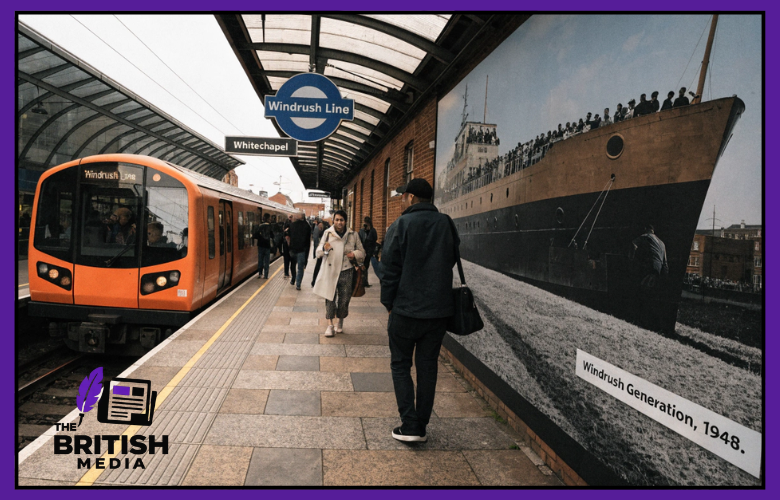
The Windrush line is one of London’s named Overground routes, providing an important rail connection between north London and a wide range of destinations across the east, south-east and south of the capital. The route starts at Highbury & Islington and continues through areas including Dalston, Shoreditch, Whitechapel, Canada Water, Surrey Quays and Peckham before reaching different southern destinations.
Its importance is both practical and historical. For passengers, the railway provides useful connections with the Victoria, Elizabeth, Jubilee and other transport services, as well as National Rail and the London Tram network at selected stations. TfL’s current route information lists connections at stations including Highbury & Islington, Whitechapel, Shadwell, Canada Water, New Cross Gate, West Croydon and Clapham Junction.
The name also recognises the Windrush generation and the contribution of Caribbean communities to London and Britain, giving this part of the Overground network a distinctive identity.
What is the Windrush line?
The route is part of the London Overground network and links several parts of London that are not always directly connected by the Underground. Rather than running through the centre of the capital, it provides a valuable cross-London option through east and south London.
TfL’s current route information begins with Highbury & Islington, followed by stations such as Canonbury, Dalston Junction, Haggerston, Hoxton and Shoreditch High Street. The service then reaches Whitechapel, Shadwell, Wapping, Rotherhithe, Canada Water and Surrey Quays before continuing towards its southern destinations.
The southern section is particularly important because the route has different branches. Depending on the service, passengers can travel towards New Cross, Clapham Junction, Crystal Palace or West Croydon.
This means the destination displayed on the train matters. Two services using the same named route may not finish at the same southern station.
Which stations are on the route?
The route serves a mixture of major interchanges, local railway stations and busy London neighbourhoods. This makes it useful for both everyday journeys and connections with other parts of the transport network.
Key stations include:
- Highbury & Islington
- Canonbury
- Dalston Junction
- Haggerston
- Hoxton
- Shoreditch High Street
- Whitechapel
- Shadwell
- Wapping
- Rotherhithe
- Canada Water
- Surrey Quays
- New Cross Gate
- Brockley
- Honor Oak Park
- Forest Hill
- Sydenham
- Penge West
- Anerley
- Norwood Junction
- West Croydon
- Queens Road Peckham
- Peckham Rye
- Denmark Hill
- Clapham High Street
- Wandsworth Road
- Clapham Junction
- Crystal Palace
- New Cross ELL
TfL confirms that many of these stations provide additional connections, including National Rail at several locations.
Where does the route go?
One of the easiest ways to understand the service is to think of it as a route linking north London with a large corridor through east and south London.
From Highbury & Islington, trains travel through Canonbury and Dalston before reaching the Shoreditch and Whitechapel area. The railway then crosses the Thames corridor towards Rotherhithe and Canada Water.
After Surrey Quays, the network reaches the south London section. From there, passengers can access places such as New Cross Gate, Brockley, Forest Hill and Sydenham, while other services continue towards destinations including Crystal Palace, West Croydon or Clapham Junction.
This makes the route especially useful for journeys that cross several London boroughs. It can remove the need to travel into the busiest central stations simply to change trains.
The exact journey, however, depends on the branch and service pattern, so passengers should check their intended destination before travelling.
What are the best interchange stations?
Several stations make the route particularly valuable because they connect with other forms of public transport.
Highbury & Islington is an important northern interchange, with connections to the Victoria line and National Rail. This makes it useful for passengers travelling between the Overground and central or north London.
Whitechapel is another major interchange. TfL lists connections with the District and Hammersmith & City lines and the Elizabeth line. This gives passengers a convenient way to continue towards other parts of London.
Shadwell connects with the DLR, while Canada Water connects with the Jubilee line. These links can make journeys across east and central London considerably easier.
Further south, Clapham Junction connects with National Rail and London Overground, while West Croydon connects with National Rail and Tram services.
Why was it given the Windrush name?
The name recognises the Windrush generation, a term associated with Caribbean people who came to Britain during the post-war period. The arrival of HMT Empire Windrush in 1948 became a defining moment in the history of modern Caribbean migration to the UK.
Many migrants arrived at a time when Britain needed workers to help rebuild the country following the Second World War. Caribbean communities subsequently became an important part of British society, contributing to areas including healthcare, transport, industry and public services.
The name is particularly appropriate for a route passing through parts of London with strong Caribbean cultural and community connections.
It also reflects a broader point about London’s identity. The capital’s transport system is used by millions of people every day, so giving a route a name connected to migration history places that story within an ordinary part of modern London life.
When did the new Overground name appear?
The individual London Overground route names were introduced as part of a major rebranding of the network. Instead of using one general identity for all Overground services, Transport for London created separate route names and colours.
The change was designed to make the network easier for passengers to understand. A traveller can now identify an individual route on maps and signs without having to rely only on the destination.
The Windrush route received a red identity. Other Overground services were also given their own names, including the Lioness, Mildmay, Weaver, Suffragette and Liberty routes.
The change did not mean that an entirely new railway suddenly opened. The underlying services and railway infrastructure had existed previously. The important change was the way the routes were organised and presented to passengers.
This approach gives the Overground a clearer structure while also allowing each route to reflect a different part of London’s history.
What connections can passengers make?
The range of connections is one of the strongest reasons to use this railway. Passengers can combine it with Underground, Elizabeth line, DLR, Tram and National Rail services depending on where they are travelling.
Some particularly useful connections include:
- Highbury & Islington – Victoria line and National Rail
- Whitechapel – District, Hammersmith & City and Elizabeth line
- Shadwell – DLR
- Canada Water – Jubilee line
- New Cross Gate – National Rail
- Brockley – National Rail
- Forest Hill – National Rail
- Norwood Junction – National Rail
- West Croydon – National Rail and Tram
- Clapham Junction – National Rail and Overground
TfL’s current route information confirms these interchange opportunities.
For passengers making longer journeys, these connections can be more important than the individual stations themselves. A well-timed change can turn a complicated cross-London journey into a much simpler one.
Why is this route useful for travelling across London?
London’s transport network is heavily centred on the city centre, but many journeys are between outer or inner suburbs rather than towards central London. This is where an orbital or cross-city railway can become especially useful.
Someone travelling between north London and south-east London may not need to go through Zone 1 if the Overground provides a suitable connection. The same applies to journeys involving places such as Peckham, Forest Hill, Crystal Palace and Croydon.
This can have practical benefits. Fewer changes may mean less walking between platforms, less time spent navigating busy interchange stations and a more straightforward journey.
It is also useful for people visiting London who want to explore neighbourhoods outside the traditional tourist centre. Stations along the route provide access to residential districts, high streets, restaurants, cultural venues and local attractions.
The best option still depends on the journey, but the route fills an important gap in London’s wider transport system.
How should you plan a journey?
The most important point is to check the final destination of the train. The southern part of the route has several branches, so passengers should not assume that every service continues to the same terminus.
It is also sensible to check live service information before leaving, particularly during weekends, public holidays or periods when engineering work may take place.
For a smoother journey:
- Check the starting station and final destination.
- Confirm which branch serves your destination.
- Look for useful interchange stations before travelling.
- Allow extra time if you need to change between transport modes.
- Check the current service status shortly before departure.
- If travelling during disruption, consider an alternative Underground, National Rail or bus connection.
TfL’s route page provides station information and current service-status information, including live arrivals and reported disruptions.
This is especially important for visitors unfamiliar with London’s railway branches.
What makes the route historically significant?
The historical importance comes from the story represented by its name. The Windrush generation became a major part of Britain’s post-war social history, but the story also has a strong connection with London’s workplaces and public services.
Caribbean migrants and their descendants contributed to London’s transport system as workers as well as passengers. Their presence became part of the wider story of how London changed during the second half of the twentieth century.
The communities associated with the Windrush generation also had a major influence on London’s culture. Music, food, language, festivals, business and community life all developed through the experiences of Caribbean Londoners and later generations.
The route therefore connects two ideas that are often discussed separately: London’s transport infrastructure and the people who helped shape the city.
For passengers, the name may simply identify the train they need. But behind that name is a much broader story about migration, work, community and London’s changing identity.
Is it worth using?
For many London journeys, yes. The main advantage is its ability to connect areas that may otherwise require several changes through central London.
It can be particularly useful for people travelling between north London and destinations across south or south-east London. The connections at Whitechapel, Canada Water and Highbury & Islington also make it valuable as part of a longer journey rather than simply as a direct railway.
It is also worth considering for leisure trips. Travellers can reach neighbourhoods such as Dalston, Peckham, Forest Hill, Crystal Palace and Croydon without relying entirely on central London transport routes.
The main drawback is the branching system. Passengers must check whether their train is going to the correct southern destination.
Overall, the route is a practical choice when it matches your journey. Its combination of useful interchanges, broad geographical coverage and historical significance makes it more than just another way of getting around London.
Frequently asked questions about the Windrush line
What was the Windrush line?
The name refers to an existing London Overground route that largely uses railway infrastructure associated with the former East London line and South London line. It received its dedicated identity as part of the London Overground’s 2024 rebrand.
Which stations are on the Windrush line?
Major stations include Highbury & Islington, Dalston Junction, Whitechapel, Canada Water, Surrey Quays, New Cross Gate, Brockley, Forest Hill, Sydenham, Peckham Rye, Denmark Hill, Clapham Junction, Crystal Palace and West Croydon. The complete journey depends on the branch and service.
What is the current status of the Windrush line?
Service status can change throughout the day. TfL provides live arrivals and current disruption information for the route, so passengers should check the official service information shortly before travelling.
Why is the Overground called Windrush?
The name honours the Windrush generation and recognises the contribution of Caribbean communities to London and Britain. It also reflects the strong Caribbean heritage found in several areas served by the route.
Does the route go to Crystal Palace?
Yes. Crystal Palace is one of the southern destinations served by the route. Passengers should check the destination displayed on their train because several southern branches operate within the wider service.
Conclusion
The Windrush line is an important part of London’s Overground network, connecting Highbury & Islington with a wide range of destinations across east, south-east and south London. Its stations include major transport interchanges such as Whitechapel, Canada Water and Clapham Junction, while its branches provide access to places including New Cross, Crystal Palace and West Croydon.
For passengers, its main value is practical. It can make cross-London journeys easier and reduce the need to travel through central London. The availability of connections with Underground, Elizabeth line, DLR and National Rail services makes it useful for longer journeys too.
Its identity also has an important historical purpose. The name recognises the Windrush generation and the lasting contribution of Caribbean communities to London’s transport system, culture and communities.
For anyone travelling across the capital, understanding the route, its branches and its major interchanges can make journey planning much easier. It is both a useful railway service and a meaningful part of modern London.